Phone
Phone  Email
Email


- Trophies and sustainability
Trophy production delays: why awards arrive late and how to get yours on time
Trophy orders arrive late when manufacturing time, transit time and the planning window before them are misjudged. It is a recurring pattern across the sector rather than an isolated manufacturer failure.
Most trophy production delays come down to a fixed calendar mismanaged during planning, not to manufacturing itself. This article breaks down regular lead times by award type, the causes behind most trophy production delays, and the questions that identify a manufacturer who will not need chasing.
Index
- How long does it actually take to get trophies?
- Why trophy orders arrive late: 5 common causes
- Work backwards from your event date
- Rush orders: what can be rushed and what can't
- Choosing a manufacturer who won't make you chase them
- Planning removes most trophy production delays
- Frequently asked questions
How long does it actually take to get trophies?
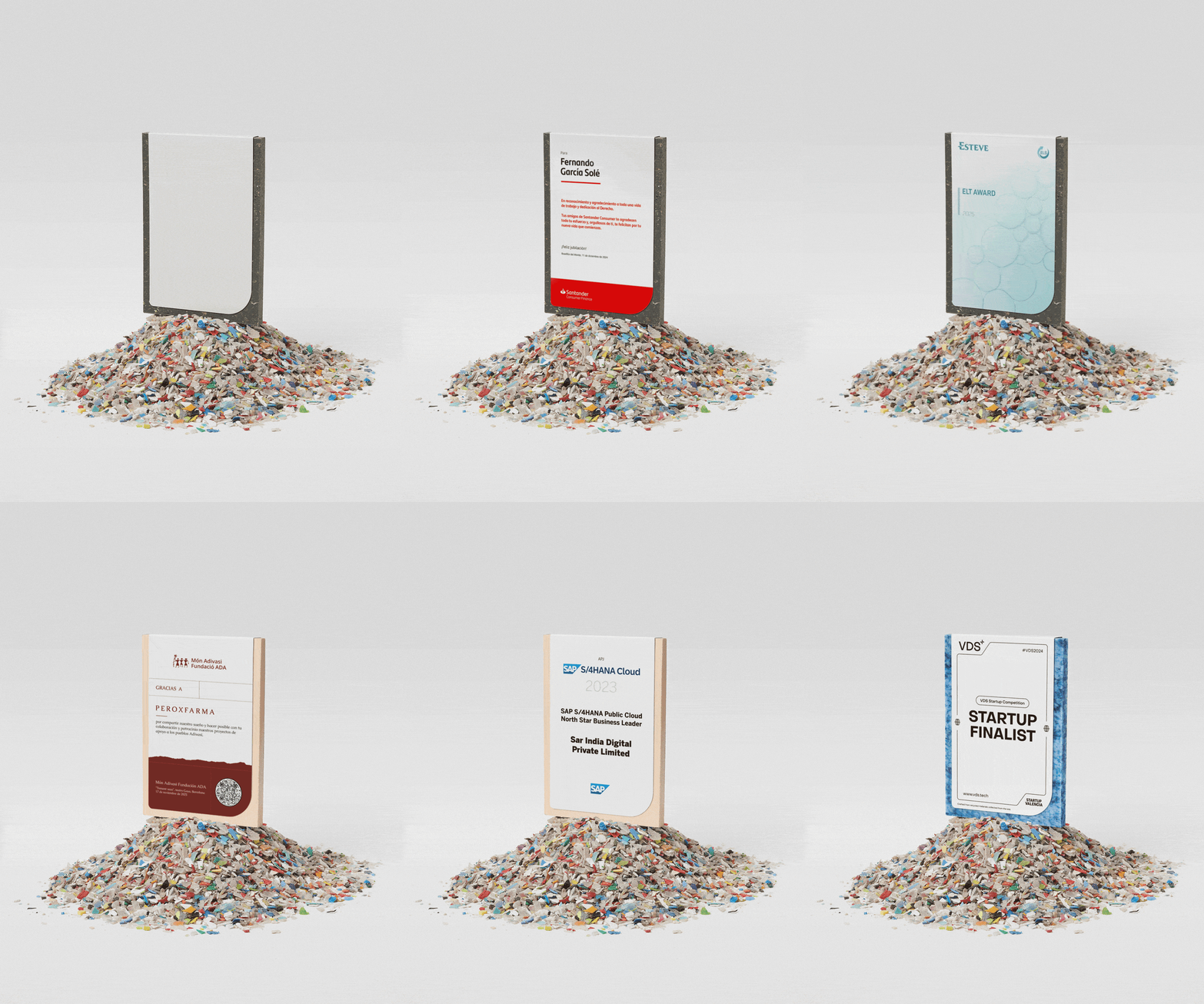
Lead times normally depend on the award type and on the manufacturer, ranging from a few days to over a month. The determining variable is whether the trophy already exists or has to be created. Stock trophies that can be adapted to an event are the fastest option. Custom trophies run longer depending on material and complexity.
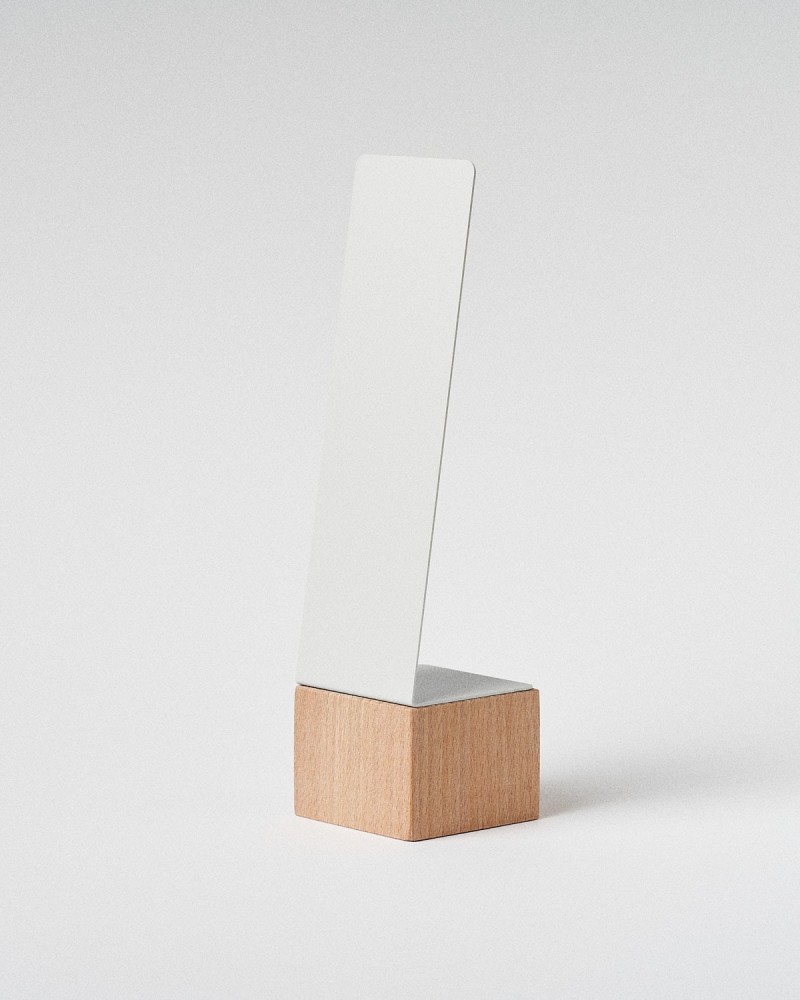
- Stock trophies, the shortest route. The trophy already exists, so the time covers artwork, approval, marking and dispatch.
- Acrylic, a few weeks.
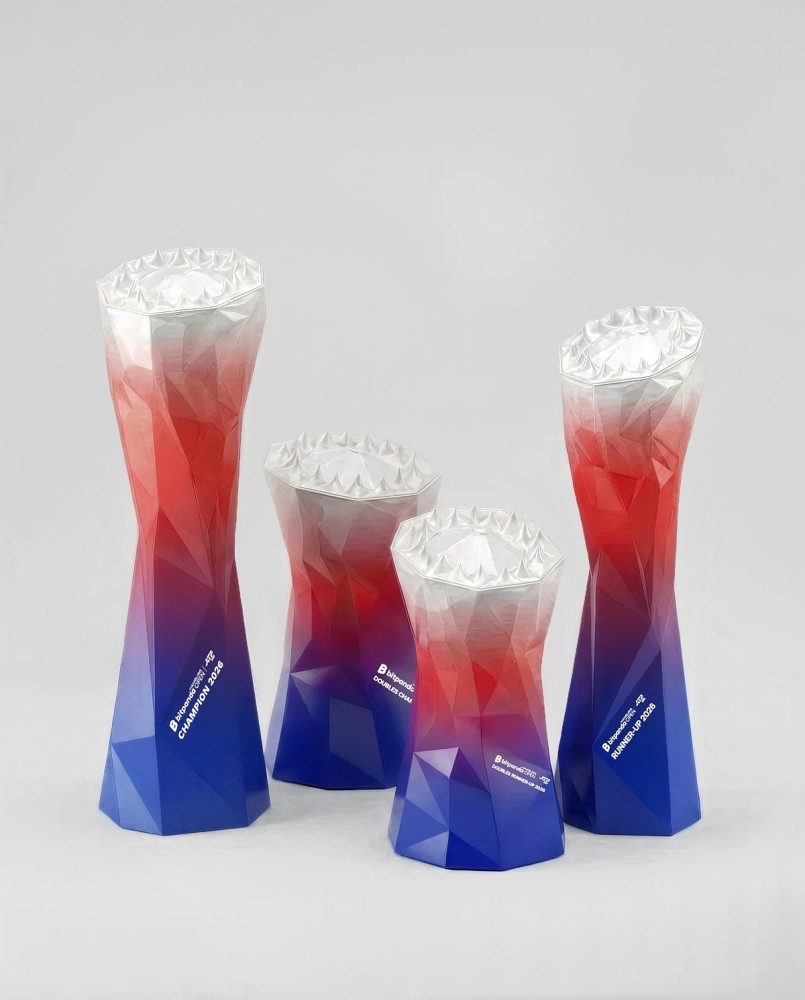
- 3D printing, longer. Print cycles run for hours per unit, and finishing is sequential.
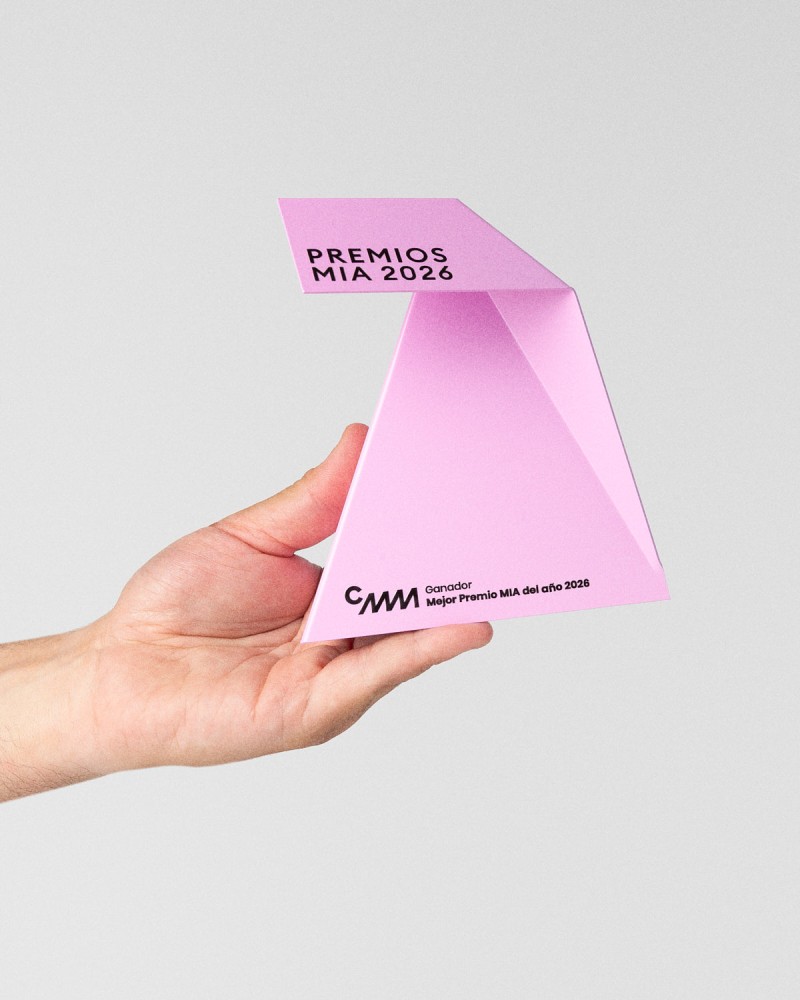
- Complex custom, over a month. Dedicated colours and multi-material assembly add fixed time that volume cannot compress.
Our own lead times follow that same logic:
- Collection trophies, urgent orders: we dispatch in 24 hours to Spain, 48 hours to the European Union and 72 hours worldwide.
- Custom acrylic: from 2 weeks.
- Custom 3D printing: from 3 weeks.
- Custom with dedicated paint colours and ad hoc manufacturing: 1 month.
On volume, we deliver up to 100 units anywhere in the European Union in 48 hours. We ship worldwide under DAP terms, and each trophy can travel to a different recipient address. Our guide to international trophy shipping covers transit times by region and customs handling.
Manufacturing and transit run in series, not in parallel. Shipping is added to the build time, not absorbed by it. Lead times are also quoted in working days, so ten days spans two calendar weeks, and any public holiday extends it.

Why trophy orders arrive late: 5 common causes
Five causes account for most late deliveries: art proof approval, stock shortfalls on large orders, personalisation that exceeds the machine's physical limits, changes requested after approval, and carrier delays.
- Art proof approval. The art proof is the digital mockup showing engraving text, logo placement and dimensions, sent for written sign-off before manufacturing begins. It is the main bottleneck. It stalls because the winners' names are not final, because a name is spelled two different ways in two documents, or because the logo arrives as a low-resolution image. Manufacturing cannot begin until one version is approved.
- Stock shortfalls on large orders. Large orders can exceed the stock held for a model, and restocking follows the manufacturer's own production cycle, not the client's calendar.
- Personalisation beyond machine limits. A 40-word citation on a 60 mm plate is not a design decision; it does not fit. Redesigning the layout restarts the approval loop.
- Post-approval changes. A name corrected after engraving means manufacturing that trophy again from the start.
- Carrier delays. Customs checks, weather and peak-season volume affect transit, and no manufacturer controls them.
None of these five causes a late delivery on its own. They only do so when the schedule has no buffer. A carrier losing 48 hours does not affect an order with a week of margin, but it does affect one due on the morning of the gala.

Work backwards from your event date
Something that helps is to plan from the event date backwards rather than from the order date forwards.
- 8 weeks out. Choose the award format and confirm quantity, including spares for damage and last-minute additions.
- 6 weeks out. Close the budget and confirm the manufacturer. For custom trophy design, this is when design work starts.
- 4 weeks out. Send final artwork: vector logos, exact engraving text, category list.
- 2 weeks out. Approve the art proof. From here, manufacturing and transit run without further input.
Recommendation: give the manufacturer a deadline earlier than the real one. If the gala is on the 30th, ask for delivery on the 23rd. That week covers a carrier delay, a spelling correction or a damaged unit without affecting the event date.

Rush orders: what can be rushed and what can't
A rush service can speed up how fast your order moves and how fast it ships. It cannot speed up the physical steps that take a set amount of time.
What can be sped up:
- Moving catalogue trophies to the front of the production line.
- Engraving and printing, which are quick once the design is approved.
- Shipping, by paying for a faster courier.
- Internal sign-off, if one person is allowed to approve the design alone.
What cannot be sped up:
- Waiting for paint and coatings to dry.
- 3D printing, which takes a fixed number of hours per unit.
- Restocking a model that has sold out.
- Assembling trophies made of several parts, which has to be done in order.
Rushing raises cost and error risk. Compressed schedules skip the second proofreading round, and an engraving error is permanent: a misspelled name can only be manufactured again. The surcharge on express freight often exceeds the price gap between a basic award and a better one, which an earlier order would have bought.
Choosing a manufacturer who won't make you chase them
The in-hands date is the date the trophies must be physically in your hands, not the date they leave the factory. Give the trophy manufacturer that exact date at the first contact. "For the 30th" is ambiguous. "In hands on the 23rd, event on the 30th" is not, and it lets the manufacturer plan transit backwards from a fixed point.
Inspect the delivery on arrival, unit by unit. Claim windows for transit damage are short and start on the delivery date, not on the day the box is opened.
Ask these questions before signing:
- Is manufacturing in-house or subcontracted?
- Is transit included in the quoted lead time or added to it?
- What is the deadline for approving the art proof?
The first question is the most important. Subcontracted manufacturing adds handover delays: files move between companies, and each handover adds waiting time. In-house manufacturing removes them.


Want your trophies delivered on time?
Place your order today
See our trophiesPlanning removes most trophy production delays
Trophy production delays are, in most cases, a calendar problem rather than a manufacturing one. The lead times are known, the bottleneck is the art proof, and the buffer costs nothing to plan. Setting the in-hands date early and approving the proof on time removes most of the risk before it starts.