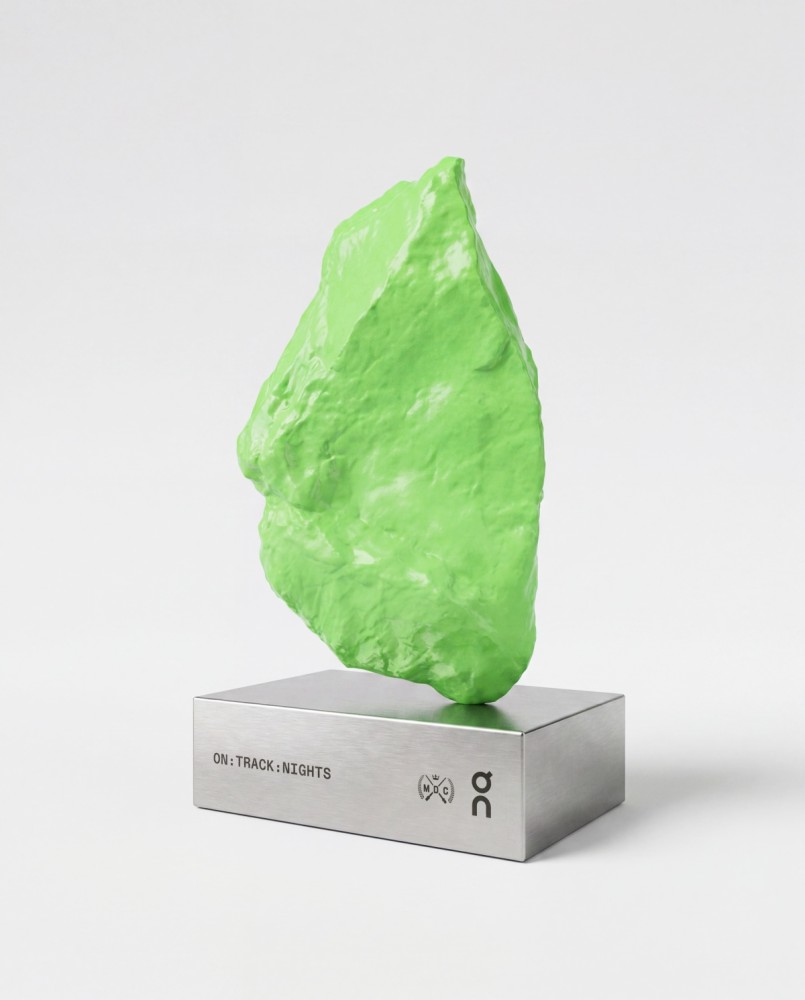
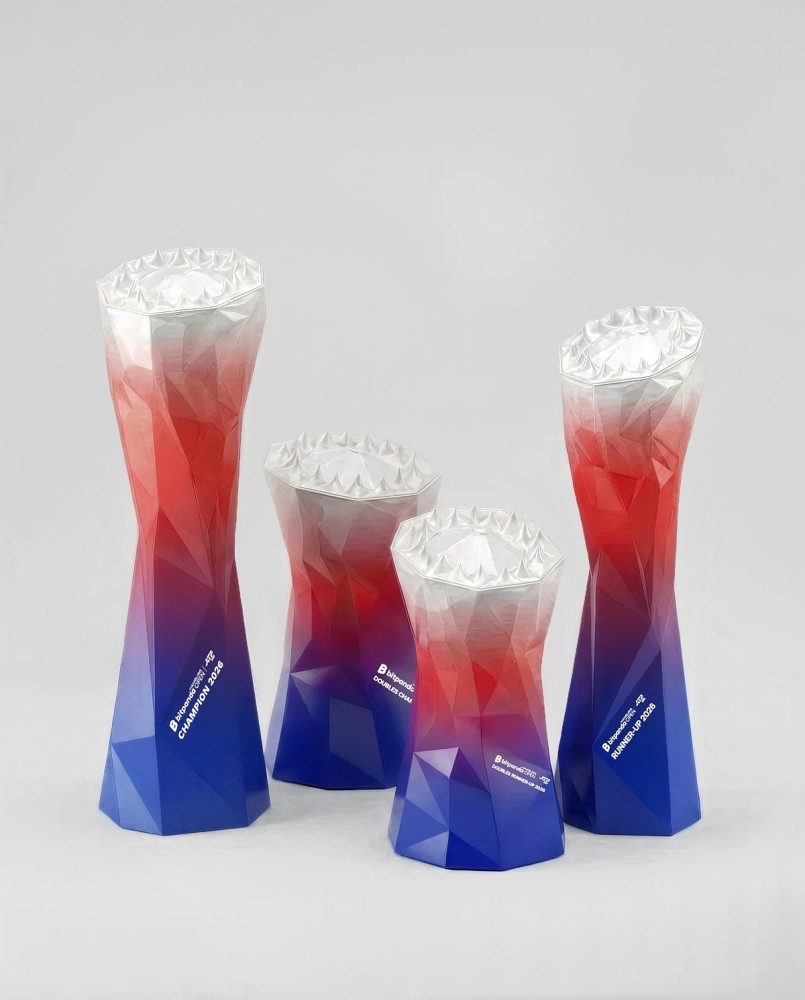

3D Trophies

3D Trophy manufacturing for companies and events

We are specialists in 3D trophy printing for companies and events. We manufacture personalised 3D trophies combining industrial design, sustainable materials and high-precision finishes.

No mass production: each project is developed uniquely for companies, agencies and event organisers worldwide.

3D Design and Customization

3D trophies

Each piece is uniquely designed, aligned with the visual identity and values of every brand.

From a logo, a shape or a concept, we develop 3D models with balanced proportions, a minimal aesthetic and a high level of detail.

Trophies can be fully customised in shape, colour, texture and graphics, integrating names, categories or corporate messages.

Technology and Precision

3D trophies

We work with several additive manufacturing technologies —SLA, MSLA and SLS— ensuring a professional finish and far higher resolution than conventional FDM printing.

This allows us to create complex geometries, smooth surfaces and precise tolerances (±0.1 mm), ideal for 3D representation trophies and institutional pieces.

Each piece undergoes a manual post-processing phase of sanding, filling and two-component industrial painting, fully matched to the brand’s RAL or Pantone colours.

Sustainable 3D Trophies

3D trophies

We manufacture using recycled PLA and PETG, as well as resins with biobased content, always prioritising the lowest possible environmental impact without compromising durability, finishing or aesthetics.

We can also combine 3D printing with FSC-certified wood bases, recycled steel or mineral composites, depending on the project’s visual language.

1. A new-generation material

rPLA Prime is a recycled biopolymer made from 100% post-consumer PLA recovered from plant-based plastic waste.

Its composition and quality control ensure precise, stable and uniform printing, maintaining a smooth texture and high detail definition.

At Sustain Awards we use it for its balance between technical performance and sustainability, achieving resistant and visually clean pieces without relying on fossil-based plastics.

2. Properties and behaviour

rPLA Prime combines rigidity, strength and thermal stability, making it ideal for high-quality trophies and ornamental pieces.

It keeps its shape over time, withstands handling and offers excellent adhesion and flow during printing.

Its natural finish and the option for post-painting enable perfectly smooth and professional surfaces, far beyond the look of domestic 3D printing.

3. Sustainability and traceability

This material comes from recycled plastic waste within the European Union, significantly reducing its carbon footprint.

The recovery and reformulation process avoids toxic additives and allows the material to be recycled again after its useful life.

At Sustain Awards we value rPLA Prime not only for its performance but because it enables trophies with a responsible origin: materials that already had a previous life and now become symbols of recognition.

Weight and Perceived Quality

3D trophies

We know a 3D trophy must convey presence and value. We adjust weight through:

Internal mineral fillers (gypsum or natural-based resins)

Metallic additives in powder or structural load in non-filament processes

This results in balanced, solid pieces with a tactile feel matching the level of the event.

Finishes and Textures

3D trophies

We offer multiple finishes: matte, satin or gloss, with texture options such as stone, metal, cement or ceramic.

The industrial paints and sealers used ensure durability, light resistance and perfect colour uniformity.

European Production and Specialised Service

3D trophies

All manufacturing takes place in the EU, ensuring reliable lead times, quality control and consistent supply.

With more than 10 years of experience, Sustain Awards collaborates with communication teams, agencies and major corporations such as Telefónica, DHL or Siemens, building a reputation for precision and trust.

3D printing for decorative pieces or trophies usually shows aesthetic (layer marks, low resolution) and functional (fragility, low density) limits.

At Sustain Awards we have optimised the process by combining advanced technologies and post-treatments, achieving results comparable to industrial injection or casting products.

High-precision 3D Printing

3D trophies

FDM printing (fused filament deposition) is widespread but its resolution is often insufficient for presentation pieces or high-aesthetic trophies.

That’s why at Sustain Awards we work with non-filament printing technologies, specifically:

SLA (Stereolithography) – Uses photosensitive resins cured by laser. Achieves layers down to 25 microns with smooth surfaces, ideal for organic shapes and fine details.

MSLA / LCD – UV light through LCD screens, improving accuracy and reducing production time with uniform finishes.

SLS (Selective Laser Sintering) – Used for small series or structural pieces, sintering polymer powder by laser, offering high mechanical strength and excellent surface uniformity.

How do we control the weight of our 3D trophies?

3D trophies

Standard PLA or PETG have low densities (1.2–1.3 g/cm³), resulting in pieces that feel too light.

To achieve the solidity expected from a corporate trophy (400 g to 1,500 g), we use two methods:

1.- Mineral-compound filling (gypsum or mineral-based organic resins) to add mass and stability.

2.- Metal powder integration (aluminium or fine steel) in SLS processes or loaded resins, achieving real weight and a metallic tactile feel.

Which sustainability criteria do we apply?

3D trophies

We prioritise recycled or biobased materials, including:

Post-consumer recycled PLA, plant-based and biodegradable under controlled conditions.

Recycled PETG from industrial packaging, with excellent thermal and mechanical resistance.

Resins with biobased content from vegetable oils.

All printing waste is recycled internally or managed through certified providers.

How do we ensure color accuracy in our 3D-printed trophies?

3D trophies

Instead of relying on the limited colour availability of filaments or resins, we apply two-component industrial paint with UV resistance, accurately reproducing any corporate RAL or Pantone code.

This ensures perfect colour coherence between 3D trophies and each brand’s visual identity.

FAQ about 3D Trophies

How are 3d trophies designed and manufactured using 3D printing?

A 3D Trophies project involves the following phases:

  1. Briefing. To get started, we need the event date, the approximate quantity and a sense of the visual direction. With that, we prepare an outline proposal, confirm the order and activate the project.
  2. 3D Modelling. Starting from your logo, a shape or an idea, we develop the three-dimensional model, defining proportions and geometry to achieve a high level of detail. At this stage we also select the most suitable printing technology — SLA, MSLA or SLS.
  3. Validation. We present the 3D model for review and approval. Once the design is signed off, we finalise the definitive budget tied to quantity, materials and lead times.
  4. Manufacturing and post-processing. We produce each trophy using the selected technology. After printing, each unit undergoes a manual post-processing stage of sanding and filling, and is finished with a two-component industrial paint matched to the brand's RAL or Pantone colours.
  5. Personalisation and delivery. We apply the final personalisation: names, categories or corporate messages. Delivered within the agreed lead times.
3D trophy manufacturing process Custom 3D trophy Sustain Awards

How much do 3D-printed trophies cost?

Pricing depends on size, geometric complexity and quantity. As a guide, custom 3d trophies start from €180 per unit for runs of more than 10 pieces.

For smaller quantities or more intricate designs, the unit cost is higher, as each piece requires individual design work, material selection, production and finishing. Request a no-obligation quote and we'll get back to you within 24 hours.

What are the lead times for 3D-printed trophies?

The minimum lead time for a 3d trophies project is 3 weeks from design sign-off. If the project involves developing a concept from scratch, the recommended timeframe is 5 weeks.

For events with a fixed date, the earlier you get in touch, the more room we have to refine the design without compromising the quality of the finish.

What materials do you use to make 3d trophies?

We work with three core materials:

  • Post-consumer recycled PLA — a plant-based biopolymer, recycled within the EU.
  • Recycled PETG — sourced from industrial packaging, with strong thermal and mechanical resistance.
  • Resins with bio-based content — partially derived from vegetable oils.

Can you reproduce any logo or shape?

Yes. Starting from a logo, a shape or a brief description, we develop the 3D model adapted to the proportions and level of detail the project requires.

We work with SLA, MSLA and SLS technologies, which support complex geometries, smooth surfaces and tolerances of ±0.1 mm.

This level of precision far exceeds conventional FDM printing and makes it possible to reproduce everything from organic shapes to fine typographic details.

How do you match the brand colours in our style guide?

We apply UV-resistant industrial two-component paint directly onto the finished trophy.

This technique accurately reproduces any RAL or Pantone colour code provided by the brand, regardless of the base filament or resin colour.

The result is a uniform, long-lasting surface that is fully consistent with the client's visual identity.

How much do 3D-printed trophies weigh?

Our 3d trophies weigh between 400 g and 1,500 g. Standard 3D printing produces lightweight trophies that lack substance; we add mineral fillers or metal powder to achieve the weight and tactile feel expected of a proper trophy.