Phone
 Email


- Trophies and sustainability
Acrylic embedment: what it is and how it’s made
Acrylic embedment is a technique commonly used for awards and commemorative objects. The industry uses several terms for it: embedment, embedding, encapsulation, inclusion, and others.
This article clears up the related terminology and explains how embedment is made, using a few documented methods. It also covers which objects can be embedded. A real-world example shows how a block is designed around an object belonging to the award recipient.
Contents
- What is acrylic embedment?
- Embedment, embedding, or encapsulation: is it all the same?
- Types of acrylic embedment
- Which material is used: acrylic or resin?
- How acrylic embedment is made, step by step
- Common problems and how to avoid them
- What objects can be embedded, and which need care
- Uses and examples of acrylic embedment
- When to choose acrylic embedment
- Frequently asked questions
What is acrylic embedment?
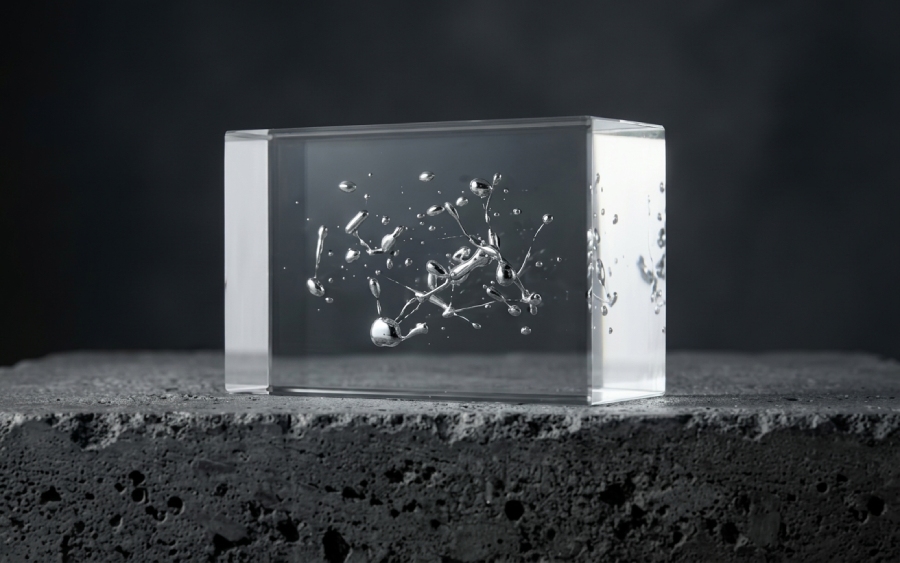
Acrylic embedment means placing an object or printed piece inside a clear block of acrylic. The object is visible from every side and left unaltered. The technique protects the object, puts it on display, and adds symbolic value.
Acrylic, technically known as polymethyl methacrylate (PMMA), is a transparent plastic.
Embedment, embedding, or encapsulation: is it all the same?
Embedment, embedding, encapsulation, and inclusion all refer to the same technique.
- Embedment: the usual commercial term.
- Embedding: a technical term used in science. Embedding in acrylic is also a histology procedure; histology is the study of tissues.
- Inclusion and casting-in: terms that turn up in craft writing.
- Encapsulation: a term describing an object sealed inside a transparent material.
Types of acrylic embedment
Some types of acrylic embedment are the sealed block, the embedment with access, and the textile sheet.
- Sealed block: the object is permanently fixed inside the block.
- Embedment with access: the object can be removed using magnets or hardware without damaging the block. Useful for objects you want to get back.
- Textile sheet: a cast acrylic sheet, meaning one poured into a mold in liquid form, 4 to 6 mm (about 0.16 to 0.24 in) thick. It holds a thin fabric inside and is used in interior design.
There are also Lucite tombstones made in a sandwich format, with a printed sheet between two panels.
Which material is used: acrylic or resin?
Both acrylic and polyester resin are used, and many in the industry call either one “resin embedment.”
Acrylic can be cast from a liquid monomer and a polymer powder. The monomer is the starting substance, and polymerization links its molecules into chains that harden the mixture.
Resin casting combines resin, a catalyst, and an accelerator. The catalyst starts the hardening reaction and the accelerator speeds it up. This mixture works with either acrylic or polyester resin.
The material you choose determines the curing method, the process that hardens the mixture.
How acrylic embedment is made, step by step
Making an embedment takes eight steps, from preparing the mold to polishing. The process requires temperature control, ventilation, and experience.
- Step 1. Prepare the object and the mold. The mold can be glass, wood, or metal and defines the shape of the block.
- Step 2. Mix the materials. The mixing ratio affects how much heat the reaction gives off.
- Step 3. Pour the first layer. The clear layer serves as a base for the object.
- Step 4. Place the object and remove air bubbles. The object goes in once the resin starts to set. Trapped bubbles would stay visible in the finished block.
- Step 5. Pour the second layer. The second mixture covers the object and closes the block.
- Step 6. Cure. Curing hardens the mixture with heat, pressure, or both, depending on the method. An autoclave is a sealed vessel that applies heat and pressure for hours.
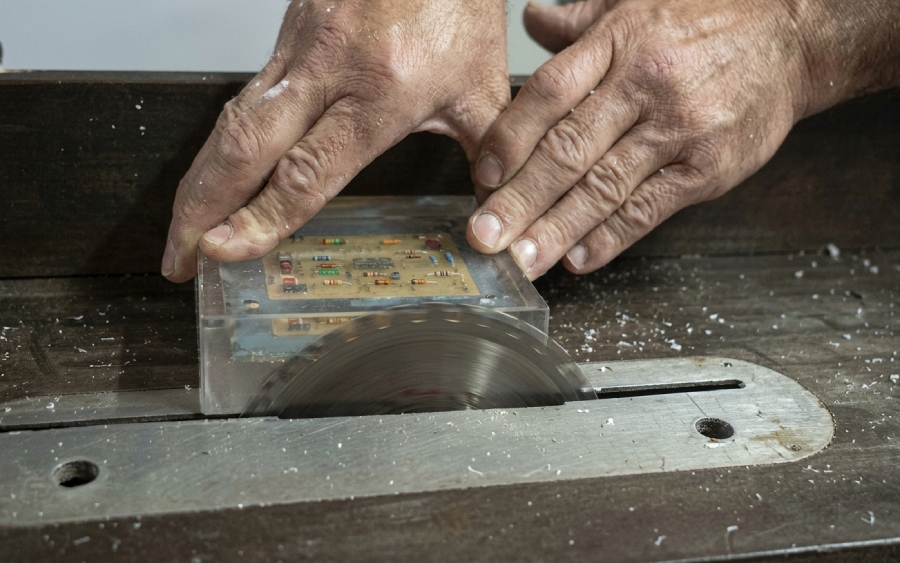
- Step 7. Demold and face the sides. Once the block is out of the mold, the flash (leftover excess material) is removed. Facing is the flat cut that evens out the faces.
- Step 8. Sand and polish. Progressive-grit sanding and polishing leave the block crystal clear.
Two documented methods produce the embedment. The figures in the table come from processes of this kind and are approximate.
| Aspect | Resin casting | Monomer and powder in an autoclave |
|---|---|---|
| Material | Acrylic or polyester resin, with catalyst and accelerator | About 60% polymer powder and 40% liquid monomer, mixed into a paste |
| Mold | Glass | Wood or metal |
| Hardening | Catalyst and accelerator, or catalyst and oven | Autoclave at about 167 °F (75 °C) and 116 psi (8 bar) for roughly twelve hours |
| Main risk | Reaction heat on delicate objects | Material shrinkage |
| Finish | Flash removal and polishing to full clarity | Progressive-grit sanding from 400 to 1,200 (the number indicates the fineness of the abrasive), then polishing with a felt wheel and compound |


Encapsulate a memory, from the recipient’s own object to the trophy.
Discover what we can design for your award.
Explore our acrylic awardsCommon problems and how to avoid them
The problems that affect the result include reaction heat, bubbles, shrinkage, and finish.
- Reaction heat: curing gives off heat and can damage delicate objects, such as paper or thin plastic. It is controlled by adding the mixture slowly or adjusting the ratios.
- Bubbles: they stay visible inside the block. They are removed when the object is placed and reduced with pressure during curing.
- Shrinkage: the material loses volume as it hardens and distorts the faces. Facing corrects the distortion.
- Finish: the final polish determines the clarity of the block. Sanding beforehand with progressive grit prepares the surface for that polish.
What objects can be embedded, and which need care
Acrylic embedment works with a wide range of objects, with real examples such as the following.
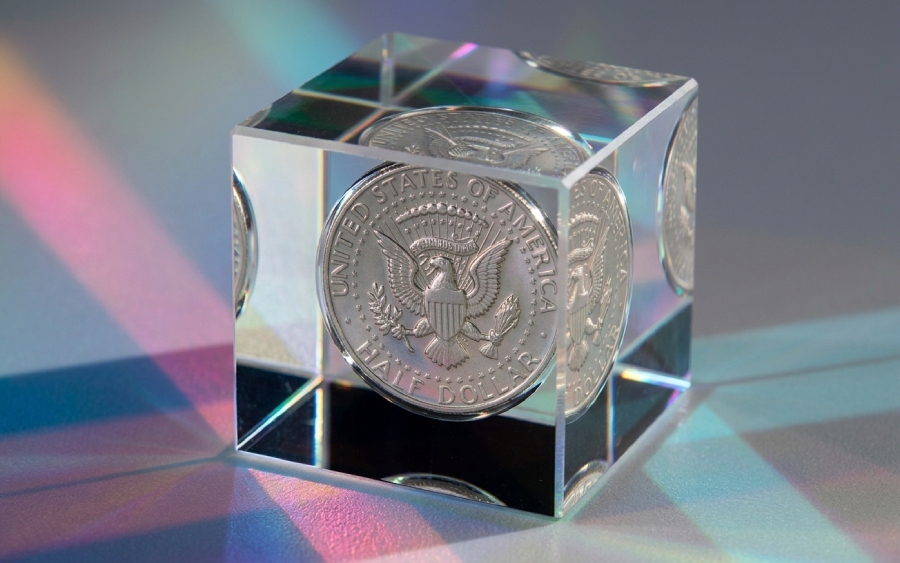
- Coins and bills: flat collectibles or everyday items.
- Medals: commemorative metal objects.
- Bearings: industrial objects for mechanical use.
- Printed items: photographs and soccer tickets.
- Natural material: insects, butterflies, rocks, shells, and preserved grass.
- Gaming pieces: dice and casino chips.
Before embedding an object, it’s worth checking its heat resistance, moisture content, fragility, and size relative to the block. Requirements vary by workshop.
Uses and examples of acrylic embedment
Acrylic embedment has many uses, including awards, corporate gifts, commemorative objects, retail displays, decor, and collectibles.
- Awards: acrylic awards can embed an object that belongs to the recipient, visible from several sides.
- Corporate gifts: blocks with a branded object or a printed piece.
- Commemorative objects: blocks that mark an event and are displayed in museums.
- Retail displays: blocks that showcase an item from the merchandise.
- Decor: blocks and sheets for interior design.
- Collectibles: the 1970s acrylic souvenirs with shells and crabs.
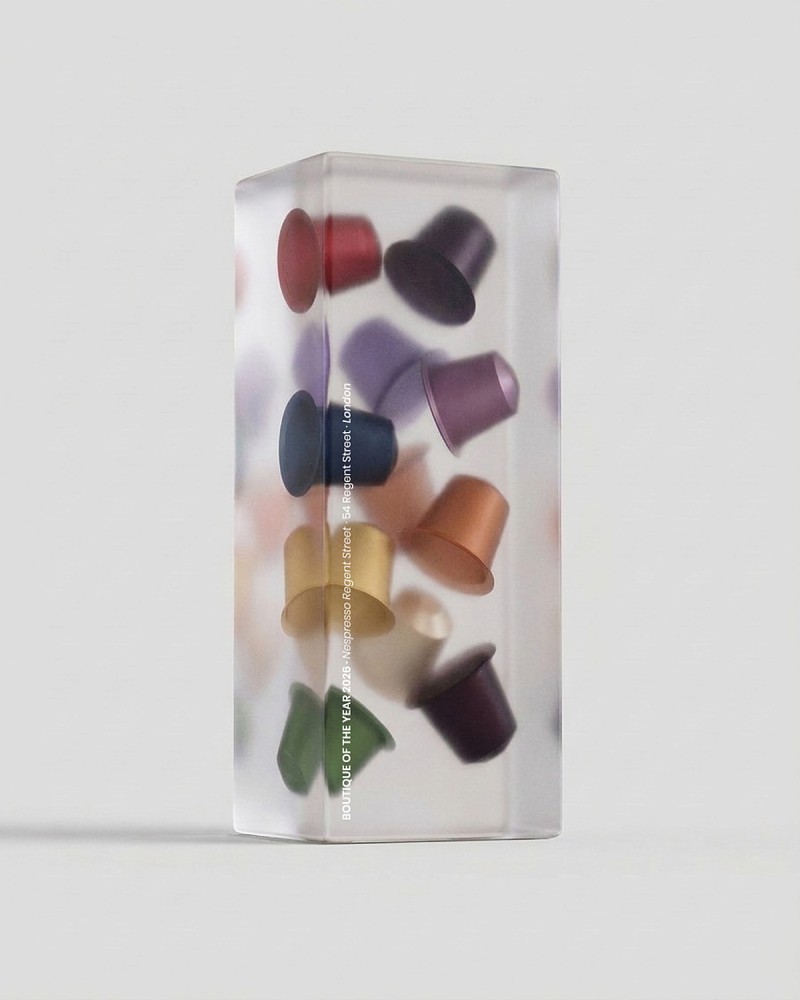
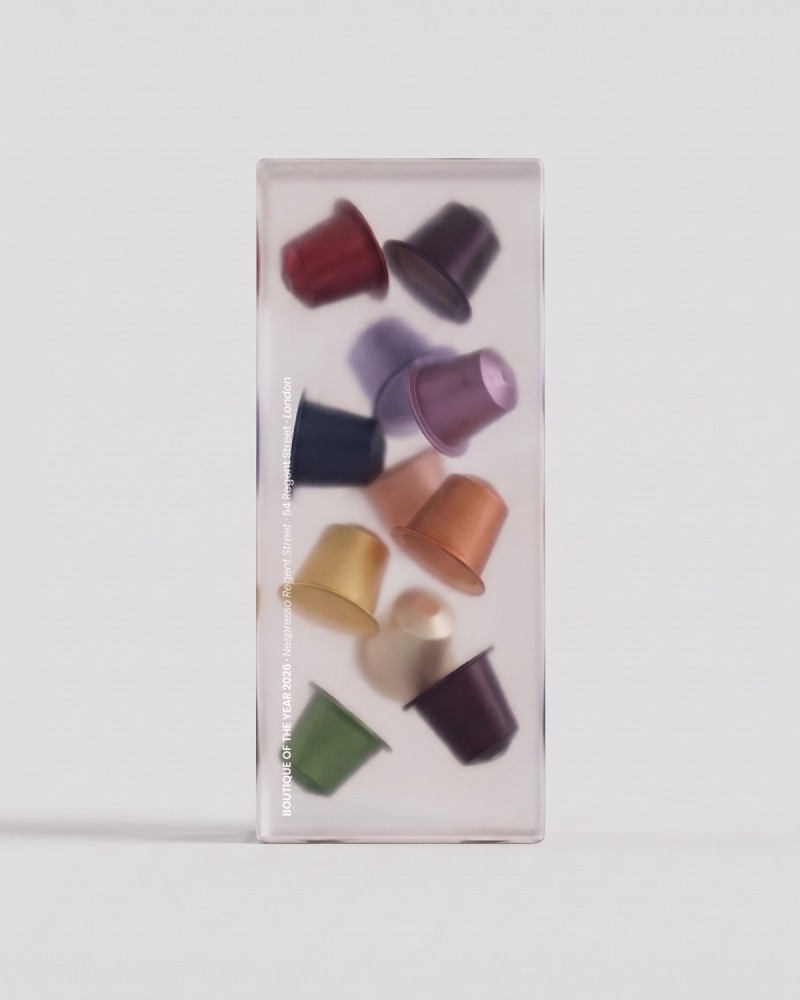
A case in point from our own work is our design for Nespresso 2026, the Boutique of the Year award. It is an elongated rectangular block with Nespresso capsules at various positions and angles. The design starts from an object that belongs to the recipient.
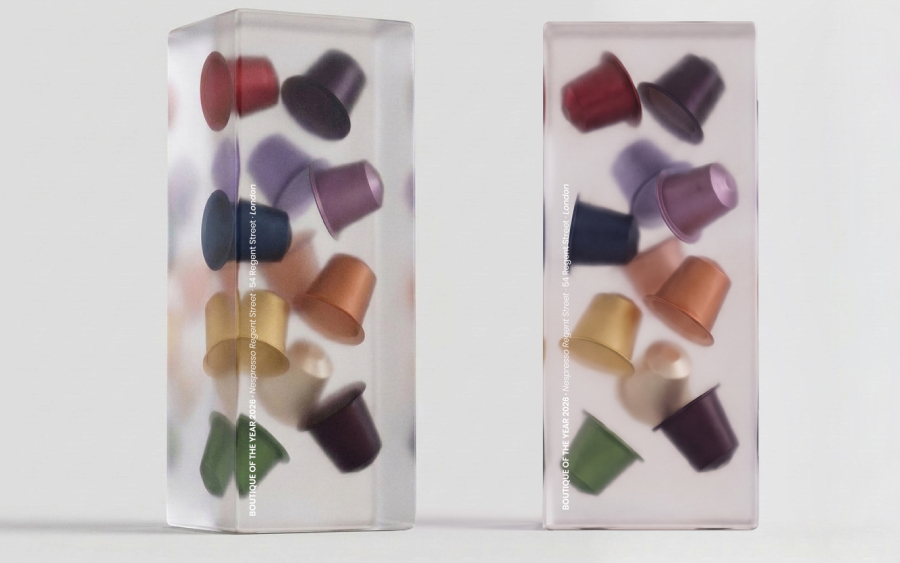
Encapsulate a memory, from the recipient’s own object to the trophy.
Discover what we can design for your award.
Explore our acrylic awardsWhen to choose acrylic embedment
Acrylic embedment places an object or printed piece in a clear block, either sealed or with access. Making it requires controlling reaction heat, bubbles, and material shrinkage. The technique adapts to the object you want to show off.
For recognition awards, embedment works best when there is an object with meaning for the recipient or for the achievement being honored. Awards built around an object of the recipient’s own are a good fit. An award for an industrial company might embed a bearing, and an internal recognition might embed the honoree’s personal items.