Phone
Phone  Email
Email


- Trophies and sustainability
How to choose the perfect award for your corporate event
Choosing the right trophy for a corporate event involves more decisions than it might seem: the type of event, the trophy format, the material, the level of customisation and the available lead time are variables that are closely interrelated. This guide walks through each of them, so you can make every decision with the best possible criteria.
 (1).jpg)
Table of Contents
- 1: Define what the trophy should communicate
- 2: Choose the format based on the type of event
- 3: Decide on the production method
- 4: Choose the material
- 5: Define how to customise each piece
- 6: Establish the hierarchy between categories
- 7: Calculate the timeline with a realistic buffer
- 8: Consider sustainability
- 9: Decide on the packaging
- Checklist before placing your order
- Frequently asked questions
1: Define what the trophy should communicate
The first step is to define what the trophy should communicate: achievement, career milestones, belonging or leadership in a category. With that criterion clearly established, the remaining decisions — format, material, customisation — have a solid starting point.
Define concretely what you want to communicate:
- Achievement or position in a ranking
- Seniority or career trajectory within the organisation
- Membership of a group or programme
- Leadership in a specific category
2: Choose the format based on the type of event
The right format depends on the sector, the tone of the event and the message you want to convey:
- Financial sector and banking. Deal toys can be a good fit when commemorating a specific transaction or milestone. Tombstones are an option when a more institutional trophy is sought. Both share a sober finish and a desk presence.
- Technology and startups. Simple geometric shapes, materials with visible texture, no ornamentation. Minimalist design suits corporate cultures that value functionality.
- Large corporate galas. Trophies between 15 and 25 cm tall with space for individual engraving.
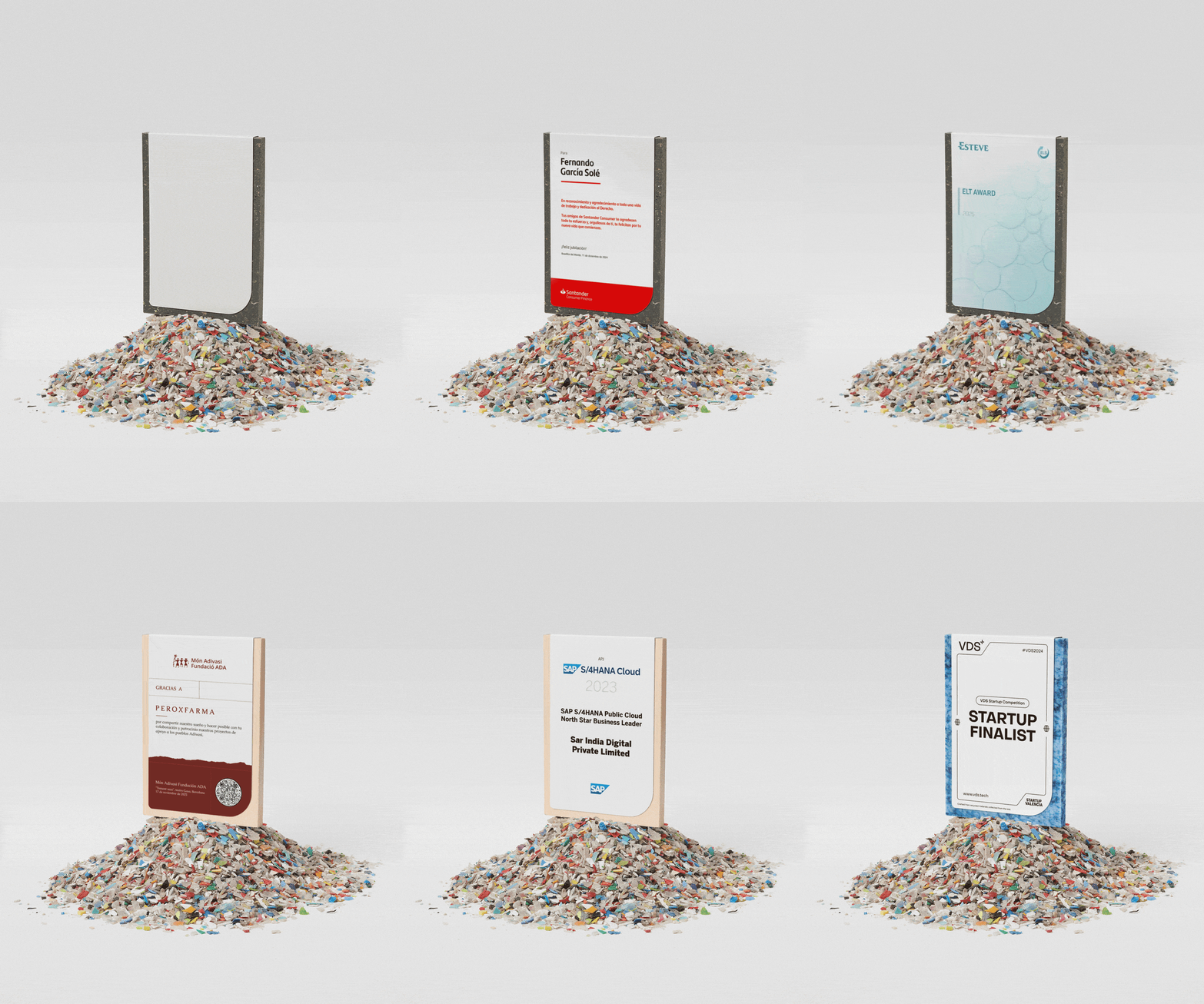
- Internal team recognition. Award Plaques — flat trophies with name, category and date engraved — are the most common option: they take up little space, are displayed at the workstation and allow individual customisation at a reasonable cost.
- Institutional and protocol events. Trophies with defined weight and texture, sober format. They convey permanence and formality without requiring a complex design.
A good corporate trophy is one the recipient identifies with from the very first moment.


Find the corporate award for your event.
Explore the collection.
Design your award now3: Decide on the production method
There are two routes with different implications for design, lead time and scale:
- Collection. Off-the-shelf trophies to which graphic customisation is applied: logos, text and the event's colour palette. The effort focuses on the graphic project. This is the right choice when the timeline is tight or the volume is variable.
- Custom trophies. Shape, material and dimensions are defined from scratch for the project. This gives greater control over the final result. It requires more time and is the right approach when the uniqueness of the trophy is a central objective of the event.
Depending on the context, one route may be more suitable than the other.
4: Choose the material
Materials for corporate trophies fall into two groups: conventional (stone, crystal, resin, metals) and next-generation (recycled PMMA acrylic, post-consumer plastic, concrete with recycled aggregates, transformed industrial waste such as recycled fishing nets).
Conventional materials
- Natural stone
- Crystal
- Synthetic resin
- Metals
These materials have a long track record in the industry, but are increasingly questioned for their environmental footprint and their failure to keep pace with current design standards.
Next-generation materials
- Recycled post-consumer plastic
- Recycled PMMA acrylic
- Concrete with recycled aggregates
- Transformed industrial waste, such as recycled fishing nets
These materials make it possible to produce trophies with the same structural properties as conventional ones, with a documentable environmental footprint and textures, tones and finishes that traditional materials cannot replicate.
.jpg)
5: Define how to customise each piece
The most common customisation elements are:
- Event or organisation logo
- Recipient's name
- Category or distinction
- Year or edition of the event
- Corporate colour palette
When the trophy incorporates the event's visual identity, the recipient receives something that unambiguously identifies where the recognition comes from.
6: Establish the hierarchy between categories
There are two ways to do this:
- By finish or colour. Awards of the same model — trophies, award plaques or prizes — with different finishes: gold, silver and bronze.
- By size. The same design in different dimensions. The difference is noticeable at the presentation and in subsequent display.
Both systems can be combined. The choice depends on the number of categories and the budget per category.
7: Calculate the timeline with a realistic buffer
Lead times range from a few days — stock items with minimal customisation — to over a month for custom design, depending on the type of event and the level of customisation.
As a reference
- Over a month. Viable for unique designs, colour adaptations and individual customisations.
- Two weeks. The most reliable route is graphic customisation on prefabricated models, with the design signed off from the outset.
- A few days. Options are limited to stock models with minimal customisation.
Two variables many organisers fail to account for in time
- Design and approval time. Before production can begin, the final artwork must be signed off. When multiple stakeholders are involved, this can take several days.
- Transit time. An order that leaves the workshop on time can still arrive late if shipping is not planned with adequate buffer.
Setting the delivery date — not just the event date — is the right place to start.
8: Consider sustainability
A trophy made from recycled, European-certified materials has a significantly lower environmental footprint than one made from virgin materials sourced from distant countries. To verify this, these are the factors you should require from the manufacturer:
- CO₂ emissions
- Toxicity of the production process
For organisations with ESG criteria — standards for assessing environmental, social and governance impact —, the coherence between the values they communicate and the objects they hand out carries real weight.
9: Decide on the packaging
The most common formats are:
- Plain trophy presentation box. Protects the trophy without additional customisation. Suitable when the budget is tight or distribution is internal.
- Branded trophy presentation box. Features the event logo, colours and name. Reinforces the value of the recognition in formal settings.
- Bulk packaging. For large orders, allows screen-printed logos and event text to be added in one or more colours.
We manufacture trophy presentation boxes in recycled Pankaster, with a weight of 600 g/m², a concrete-effect finish and a matte texture. Custom design is available.
Checklist before placing your order
Before confirming your order of corporate trophies, make sure the following points are resolved:
- Event date and latest delivery date.
- Number of categories and trophies per category.
- Hierarchy criterion: by colour or by size.
- Visual identity: logos, typefaces and colour palette.
- Final text for each trophy: recipient's name, category, year.
- Production method: off-the-shelf trophies with graphic customisation or custom trophies.
- Individual packaging: yes or no.
Find the corporate award for your event.
Explore the collection.
Design your award nowEvery decision about the trophy is a decision about the event
The material, production method, level of customisation and available lead time are interrelated variables. Understanding them allows you to make informed decisions and allocate the necessary time to each stage of the process.