Phone
 Email


- Trophies and sustainability
Seoul Design Award Trophy: A Sculpture Made from Discarded Nets, Plastic and Shells
Since 2019, the Seoul Metropolitan Government and the Seoul Design Foundation have presented the Seoul Design Award, formerly known as the Human City Design Award. The award recognises design projects that tackle everyday problems and seek a harmonious relationship between people, society and the environment.
In 2023, the foundation commissioned a new trophy from LAB.CRETE, a craft and design studio in Seoul that works with concrete in an experimental way. The brief was to show the value of sustainability through a material made from waste.
Based on that commission, this article looks at the trophy’s design and materials. It also draws lessons for brands that want to design their own trophy.
Contents
- Design and materials of the Seoul Design Award trophy: waste bound into one piece
- What winners receive with the Seoul Design Award trophy
- Press coverage for the Seoul Design Award trophy
- What a brand can learn from the Seoul Design Award trophy
- Seoul Design Award 2026: key dates
- Two frames, one band and discarded materials
- Frequently asked questions
Design and materials of the Seoul Design Award trophy: waste bound into one piece
The trophy turns waste into a new material. That is LAB.CRETE’s approach, which treats it as a way of making use of what gets thrown away. In this way, the trophy shows the value of sustainability, as the World Design Organization, the body that backs the award, explains.
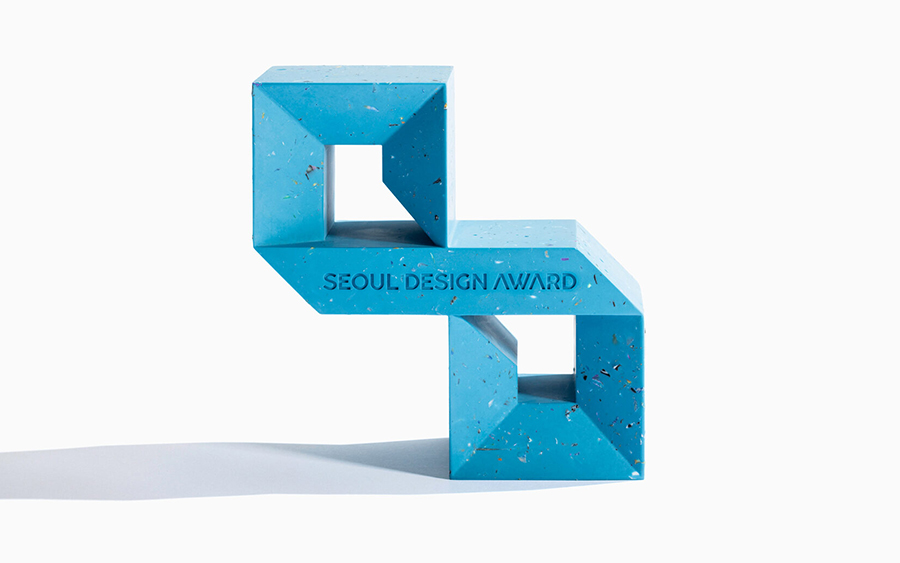
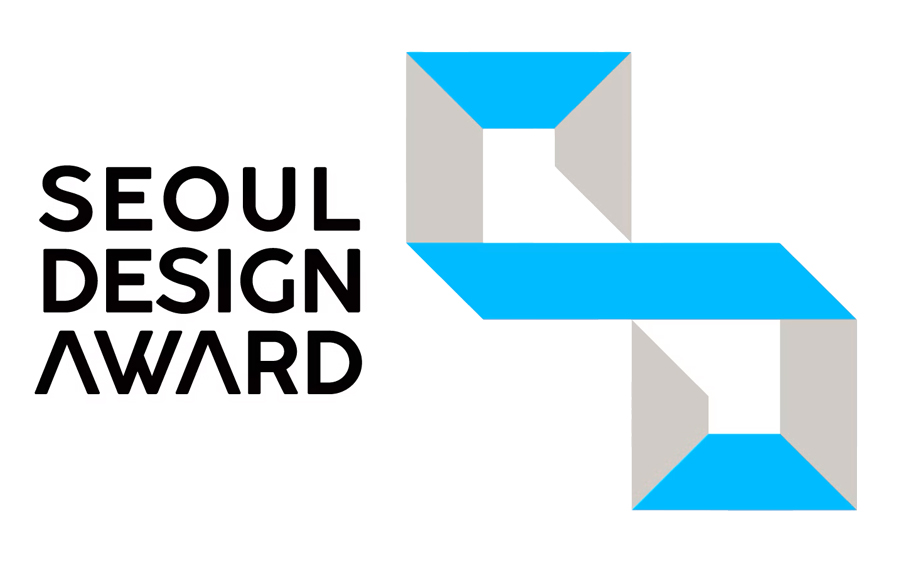
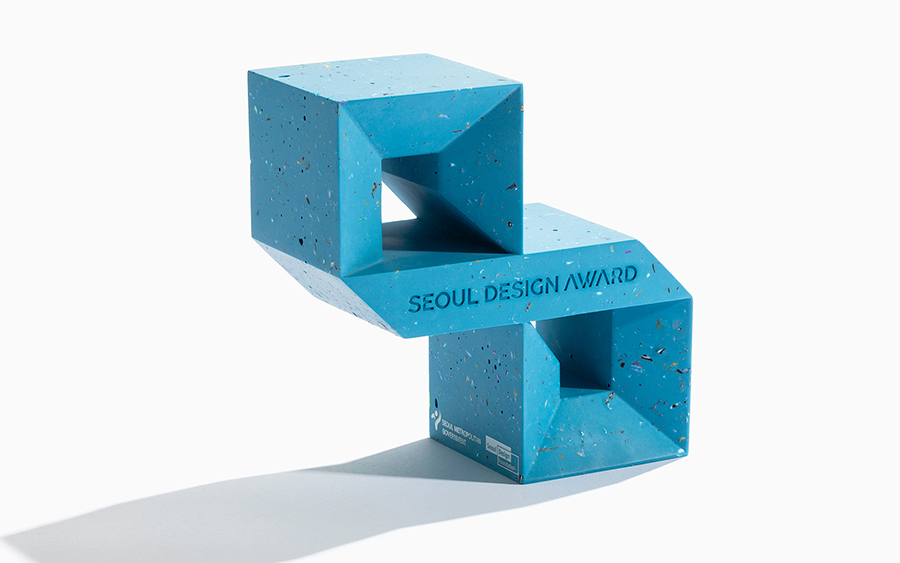
The sculpture reproduces the composition of the award’s logo: two cubic frames joined by a diagonal band. One frame rests on the band, on the left, and the other holds it up from below, on the right. Both have a through opening with a bevelled interior that lets light pass. The name of the award is engraved on the band, and on a side face of the lower frame a metal plate carries the winner’s details.
LAB.CRETE gathers fishing nets, plastic, shells and other waste and binds them with Jesmonite, a mineral-based compound with a water-based acrylic resin. For that mix, the studio chose the award’s colour. The result is a matte blue matrix with white, green, purple and black fragments, and small irregularities that are part of the texture and make every piece different.
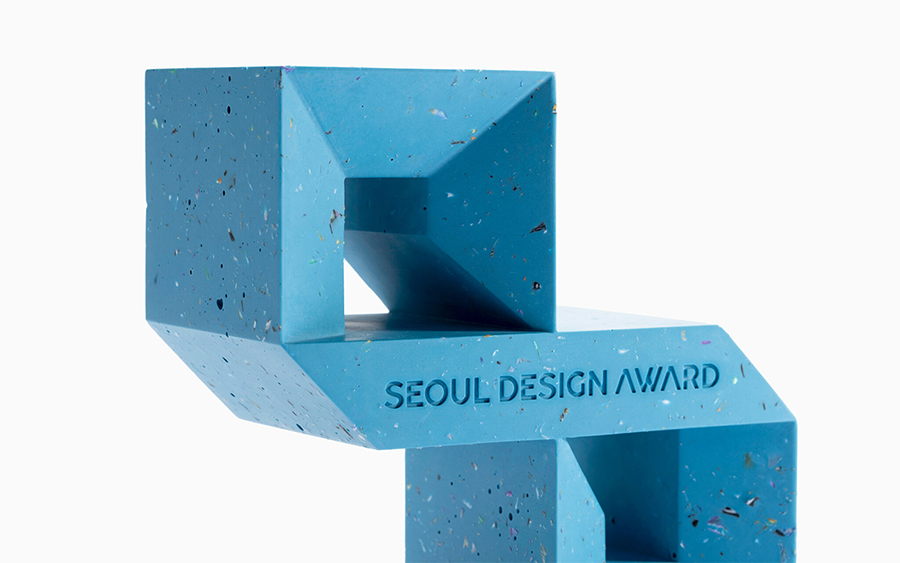
Frames, band and matrix form a single piece: the award’s logo turned into volume, and a material that carries its concept.
What winners receive with the Seoul Design Award trophy
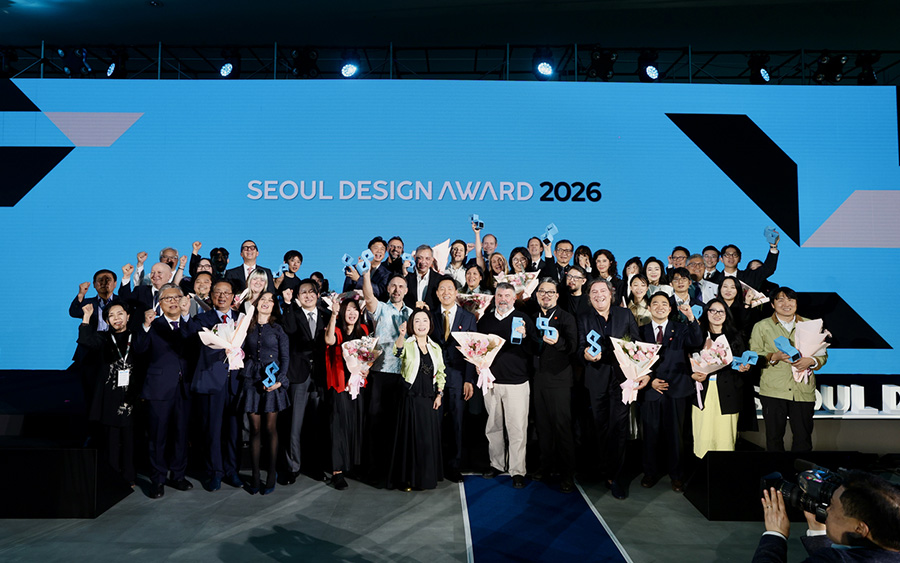
In 2026, the award received 1,204 projects from 91 countries. The Top 10 were judged live by a nine-member jury, including Mauro Porcini, head of design at Samsung Electronics, and Andrea Cancellato, director of the ADI Design Museum in Milan. Their scores were combined with the public vote. That evaluation resulted in four types of distinction:
| Distinction | Who decides, how many and prize money (2026) |
|---|---|
| Grand Prize | 1 winner, chosen from the Top 10 by the jury and the public vote; 50 million won |
| Best of the Best | 9 winners from the Top 10; 10 million won each |
| Young Designer Award | 2 winners, for projects not yet built (models, prototypes or proposals) and open to students; 5 million won each |
| designboom Special Prize | 3 winners chosen by designboom, a design-focused outlet, which publishes a feature on each |
The prize money, 150 million won in total in 2026, rewards the winners’ work. On top of it comes a visibility package shared by the more than 60 award recipients. Its main elements include:
- Permanent use of the award logo: winners can display the distinction in their communications with no time limit.
- Assessment by global experts: each winner receives an evaluation that offers an outside view of their project.
- International exposure: a press event, the award’s newsletter and its social media widen the project’s audience.
- Ceremony and networking party: the invitation brings winners together with other recipients and industry professionals.
- International conference: Top 10 winners present their project, with three hotel nights and partial travel support.
In 2026, the rules reserved the trophy for winners present at the ceremony.


Turn your award into a work of art
Custom design, care in every detail
Design your custom trophyPress coverage for the Seoul Design Award trophy
On 14 October 2026, SBS News reported in its English edition on the Grand Prize, awarded to Otter Newborn Warmer, a portable warmer for newborns developed by Design That Matters. That unpaid mention, generated by the news the award creates, is what is known as earned media.
For the winner, being named on a South Korean TV network takes the project to an audience beyond the design press. That visibility lasts: according to the Seoul Design Foundation, Solar Cow & AYANTU, a project by the company York and a 2024 winner, appears in Korean high-school art textbooks from 2025.
What a brand can learn from the Seoul Design Award trophy
When a logo’s shapes are carried over into volume, the brand gets an object that is recognisable from any angle. The Seoul Design Award does this with the two frames and the diagonal band of its logo. Whoever receives it poses with a silhouette that points to the award without any need for explanation.
In turn, when a brand picks a material that comes from waste, the trophy reveals its origin without having to explain it. In this trophy, the fragments of nets, plastic and shells read as texture rather than noise, and every piece keeps a different pattern. For the brand, a material in tune with its convictions turns that texture into an argument for what it rewards.
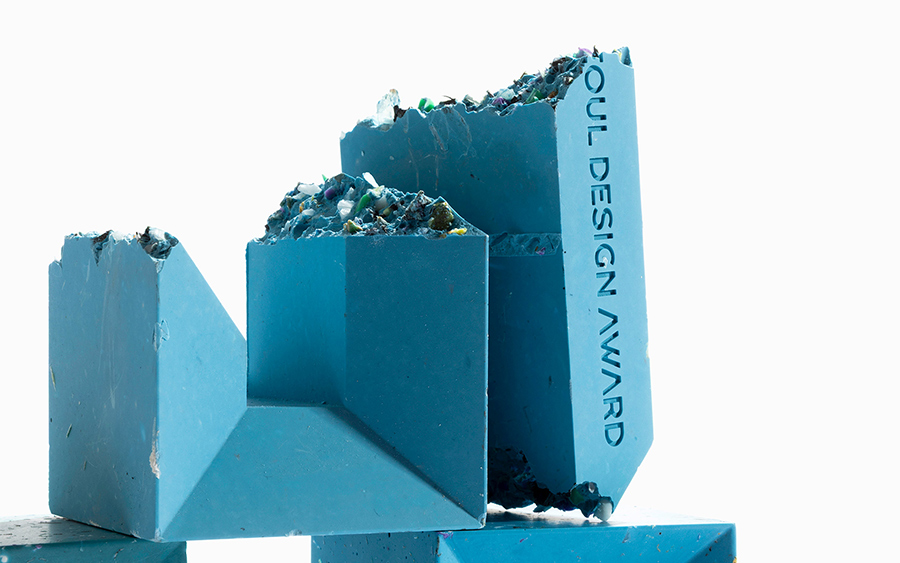
A material consistent with the brand’s convictions and a shape that reproduces its logo, as in the Seoul Design Award, give the trophy a meaning tied to whoever presents it.
Seoul Design Award 2026: key dates
The 2026 edition followed the schedule of the award’s official call for entries. The organisers have not yet published the 2027 schedule.
- 30 March to 30 June 2026: project registration, until 3:00 p.m. (Korea time).
- July to September: two-round evaluation.
- September: public vote and final evaluation of the Top 10.
- 14 October: ceremony and conference at the Dongdaemun Design Plaza in Seoul.
Turn your brand’s logo into a trophy
Custom design, care in every detail
Design your custom trophyTwo frames, one band and discarded materials
The Seoul Design Award trophy turns the logo’s frames and diagonal band into a blue sculpture of discarded nets, plastic and shells. Whoever receives it takes home an object in which form and material carry the same concept.
At Sustain Awards we design and make custom trophies based on what your brand wants to recognise, including the shape of its logo. In addition, our recycled fishing net trophies, with bases and bodies made of a material that is 100% fishing nets collected in the Mediterranean, let the material express your brand’s convictions.