Phone
Phone  Email
Email


- Trophies and sustainability
Trophy trends 2026: materials, technology, and sustainability
The trophy is no longer defined by a fixed shape with an engraved plate. Today it carries values and gains visibility well beyond the award ceremony itself. A culture of recognition and a pushback against the generic are driving that shift.
The trophy trends 2026 bring together purpose-built design, manufacturing technology, lower-impact materials, and digital integration. This article walks through those design directions for the 2026 awards season.

Contents
- Purpose-built design for every industry
- 3D printing and additive manufacturing
- Geometry, minimalism, and color palette
- Sustainability as a design criterion
- Physical and digital integration
- How to choose the right trend
- Trophy trends 2026
Purpose-built design for every industry
Trophy design for 2026 translates each industry's identity into shape and material.
The specific is gaining ground. A trophy for the transport sector echoes the typography of an airport display board; a tech one, the geometry of a circuit board. The design starts from a logo or a concept and adjusts proportions and shape.
The trophy speaks to the specific achievement and is recognizable without reading the plate. A generic award conveys generic recognition; the trend is moving toward trophies with ever more specific, carefully crafted identities.

3D printing and additive manufacturing
3D printing builds the trophy layer by layer, with no mold. It's now a routine production method. 3D trophies are made on industrial printers, which are more precise than home machines:
- SLA and MSLA: cure liquid resin with light, layer by layer.
- SLS: fuses plastic powder with a laser, with no supports.
This method creates shapes a mold can't allow and speeds up prototyping; today's post-processing brings the finish close to that of traditional manufacturing. Giving each award its own shape no longer drives up the cost of the project. That's why recognition can be as specific as the achievement it celebrates, not a repeated trophy.
In our case, we approach sustainability in 3D printing through both the material and the process. We manufacture with rPLA filament, a recycled plastic that replaces virgin plastic. Unlike machining, which removes material, additive manufacturing starts from scratch and leaves less waste.
The same thinking explains the rise of modular trophies made with 3D printing. They come apart and reconfigure, or they hold plates that get swapped out each year. By extending the trophy's life, they cut production and fit recurring award programs.
Geometry, minimalism, and color palette
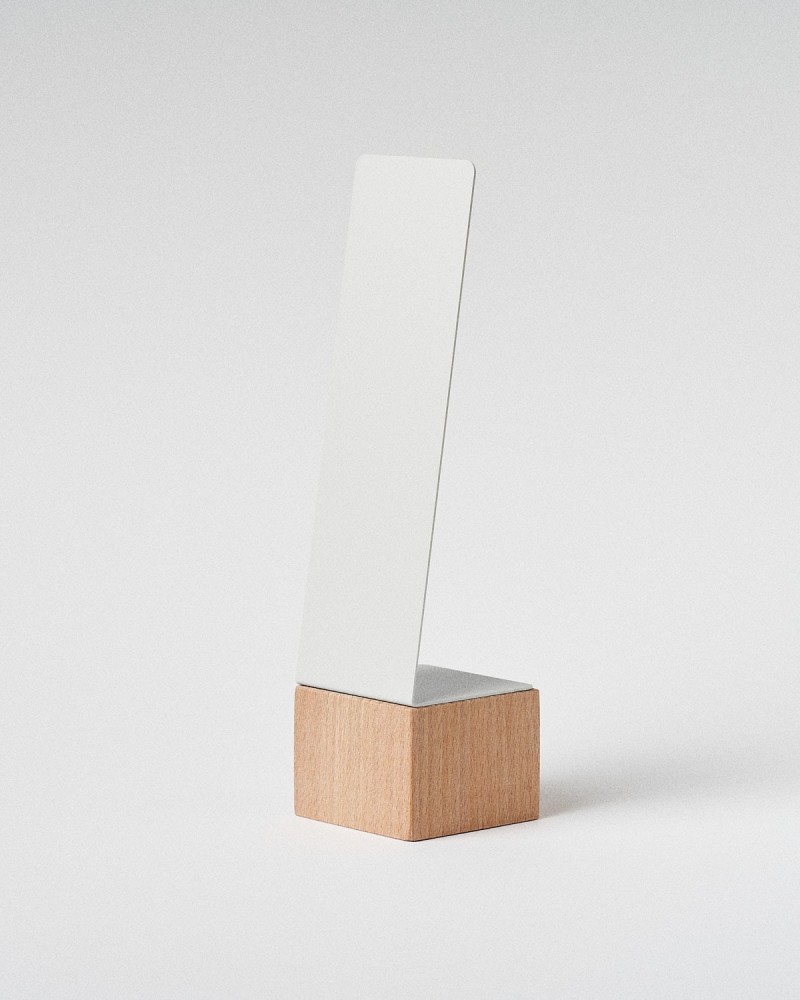
One of the visible trends in the trophies of 2026 is the adoption of the movements shaping industrial design today. In place of the ornamental cup come clean geometry, material honesty, and proportion as an expressive device.
- Clean geometry: straight lines and defined volumes, suited to machining or printing.
- Material honesty: matte surfaces, natural tones, and finishes that show the material as it is.
- Proportion and asymmetry: unconventional weights and silhouettes that set the piece apart without ornament.
These ideas take shape in the design movements on the rise: warm minimalism, brutalism, bold, Nordic, and Japandi. Each one shows up differently:
- Warm minimalism: monolithic shapes in a single material, with a matte finish and low-relief engraving.
- Brutalism: exposed concrete, heavy mass, and visible joints.
- Sculptural bold: abstract, asymmetrical shapes in resin or colored glass, sometimes in a numbered run.
- Nordic: light wood, organic shapes, and a scale that makes the trophy easy to hold.
- Japandi: light wood with an accent of bronze or stone, softened geometry, and a neutral palette.
Quality comes down to proportion and finish, not ornament; a poorly resolved minimalism reads as unfinished.


Shape, material, and meaning in a single trophy
Made for your event
Request your personalized trophySustainability as a design criterion
Material stops being a neutral backdrop and becomes the first design decision. The material you choose determines what happens to the trophy at the end of its life. Each option earns its place in the design for what it brings to the circular economy:
- Recycled acrylic: a recycled acrylic trophy starts from reclaimed acrylic and can be recycled again.
- Post-consumer recycled plastic: a post-consumer recycled plastic trophy feeds urban waste back into production.
- Recycled concrete: a recycled concrete trophy uses reclaimed aggregate and cuts the extraction of virgin material.
- Recycled rubber: a recycled rubber trophy gives end-of-life tires a second life.
Mono-materiality, one material per trophy, makes recycling easier at the end of its life. The circular economy feeds used material back into production and extends the resource's life.

Physical and digital integration
Physical and digital integration links the trophy to online content. A QR code opens a video or a digital certificate. An NFC chip, the same one used for contactless payment, does the same when you tap your phone. Augmented reality brings the trophy to life or recreates the moment of the presentation.
Recognition has also gone fully digital in other arenas. In video games, the trophy is an achievement you unlock and share within a community. It's the most digital form of recognition there is.
NFTs, tokens that certify ownership of a digital object, took that idea to the extreme. Their collapse made it clear that recognition without a physical object is fragile. The physical trophy brings the permanence that digital, on its own, can't guarantee.
That's why the 2026 trend doesn't split the physical from the digital but joins them in one system. The object gives presence and permanence; digital adds reach and a verifiable credential.
How to choose the right trend
Choosing the trend comes down to four factors: budget, brand values, type of event, and the life of the program.
- Budget: sets the material and manufacturing complexity you can take on.
- Brand values: guide the choice between recycled, bio-based, or local material.
- Type of event: shapes the scale and format of the trophy.
- Life of the program: a one-off award and a recurring one call for different solutions.
Coherence among shape, material, and meaning supports recognition that holds its value long after the awards ceremony.
Shape, material, and meaning in a single trophy
Made for your event
Request your personalized trophyTrophy trends 2026
The trophy trends 2026 share one common thread: a rejection of the generic, mass-produced trophy. The gold plastic cup gives way to objects with real design intent and a shape tied to the achievement.
No material or manufacturing decision is a neutral technical detail anymore. Each one says something: concrete conveys permanence; recycled material, responsibility; the digital record, reach.
A well-resolved trophy brings shape, material, and meaning together in a single object. And it says as much about the person receiving it as about the one presenting it.