Phone
Phone  Email
Email


- Trophies and sustainability
Corporate Gift Ideas: The Complete Guide for Employees, Clients and Partners
Choosing the right corporate gift ideas is one of the most effective ways to reinforce culture, celebrate milestones, and build lasting relationships. Corporate gift ideas are tangible or experiential items a company gives to employees, clients or partners to recognize achievements, mark milestones and reinforce relationships — and, chosen well, they communicate appreciation far better than a bonus alone.
This guide covers the full landscape: the ten gift categories that work, why gifting matters for the business, and how to build a program. Executives are treated as one tier within that picture, not a separate theme, and each audience is routed to a dedicated guide for deeper detail.
Key Takeaways
- Corporate gifts work best when they align with the recipient's role, relationship, and the occasion being marked.
- Personalization is the single biggest differentiator between a forgettable gift and one that creates lasting goodwill.
- Gift cards and flexible rewards let the recipient choose, which removes the risk of misjudging taste.
- A structured corporate gifting program is more cost-effective and impactful than ad hoc purchasing.
- Different audiences need different gifts — this guide links to dedicated employee, client and partner playbooks.
Index
- Why Corporate Gifts Matter for Your Business
- 1. Personalized Awards and Trophies
- 2. Premium Branded Merchandise
- 3. Experience-Based Corporate Gifts
- 4. Gift Cards & Flexible Rewards
- 5. Tech Accessories and Gadgets
- 6. Gourmet and Curated Gift Sets
- 7. Custom Desk and Office Items
- 8. Wellness and Self-Care Packages
- 9. Books, Learning and Development Gifts
- 10. Charity Donations in the Recipient's Name
- Corporate Gift Ideas by Audience
- How to Adapt Corporate Gifts at Every Business Stage
- Conclusion
- Frequently Asked Questions
Why Corporate Gifts Matter for Your Business
Organizations that invest deliberately in corporate gifting consistently outperform those that treat it as an afterthought. According to SHRM research on employee recognition and retention, 82% of HR professionals said their recognition program had a positive impact on employee engagement, and 54% reported that it helped them retain staff.
The pattern is consistent: people who feel recognized are markedly less likely to leave, and the same principle extends to the clients and partners a business wants to keep. Recognition is one of the least expensive levers a company has for protecting its most valuable relationships.
Tangible gifts create an emotional anchor that digital messages simply cannot replicate. When a recipient holds a physical token of appreciation, the impact of that moment can last for months or even years.
Below are the core reasons to prioritize a structured gifting strategy:
- Employee retention: Tangible recognition reduces voluntary turnover by making people feel genuinely valued.
- Client relationships: A thoughtful gift strengthens trust and makes an ongoing working relationship easier to sustain.
- Partner loyalty: Recognizing shared wins deepens collaboration with the partners a business depends on — the focus of our guide to gifting business partners.
- Brand storytelling: Every gift communicates what your company stands for — its values, aesthetics, and ambitions.
- Milestone celebration: Anniversaries, promotions, and completed projects become memorable when marked with a gift.
- Team morale: Group gifting moments, such as an annual awards ceremony, build collective pride and shared purpose.
A corporate gift is not a transaction — it is a statement of intent. When selected with care, it tells the recipient that their contribution is recognized, their loyalty is valued, and their future with the organization matters.
1. Personalized Awards and Trophies
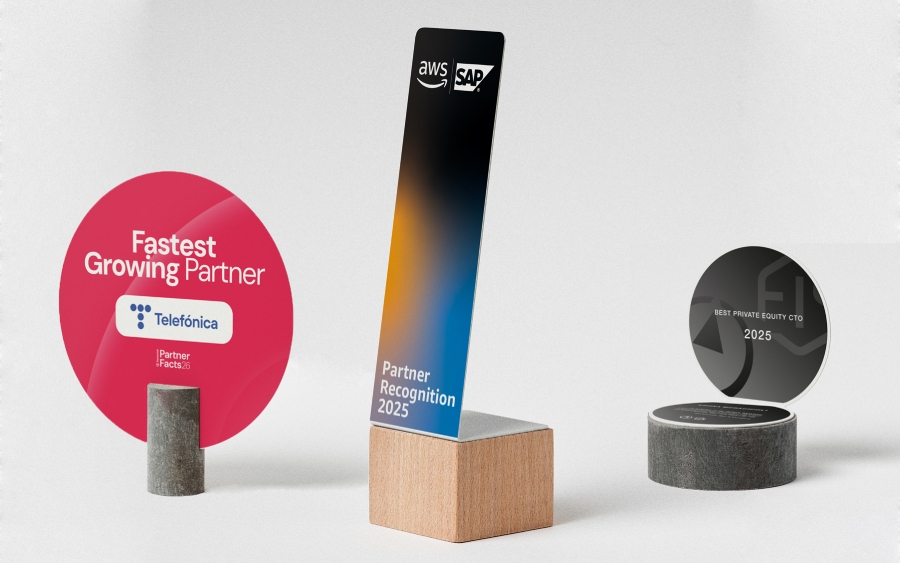
Personalized awards remain one of the most enduring and impactful recognition gifts available to any organization. Unlike consumable gifts that are used and forgotten, a trophy or award plaque occupies a permanent space on a desk or shelf.
That staying power makes awards the default choice for annual recognition programs, sales competitions, and long-service milestones — the kind of moments covered in our guide to celebrating years-of-service milestones.
The key to maximizing impact is personalization. Engraving the recipient's name, the date, and a specific achievement — rather than a generic "Employee of the Month" inscription — transforms a standard piece into a meaningful artifact. Finding the right words to write with a recognition gift is part of that craft, since the inscription and accompanying note carry as much weight as the object itself.
2. Premium Branded Merchandise
Premium branded merchandise occupies a different space than standard promotional products. Where a cheap pen with a logo might be discarded within days, a high-quality branded item — a leather notebook, a premium travel mug, or a luxury canvas bag — becomes part of the recipient's daily routine.
Gifts in this category succeed when the product is genuinely useful and the branding is tasteful rather than overwhelming. For senior recipients, understated elegance works best: a beautifully crafted leather portfolio with a discreet embossed logo effectively makes the carrier an ambassador for your brand.
3. Experience-Based Corporate Gifts
Experience-based gifts are among the fastest-growing corporate gifts for organizations that want to move beyond physical products. The options create memories that no object can replicate:
- a cooking masterclass
- a wine tasting
- a spa day
- tickets to a major event
Experiences scale from individuals to whole teams, and they work equally well as incentive travel and corporate events. A shared outing reinforces bonds between colleagues far more effectively than an individual object.
They also suit client relationships: inviting a key client to an exclusive event reinforces the relationship more than a gift basket. The same logic shapes how businesses choose gifts that keep clients engaged — matching the gesture to the relationship rather than to a price point. From a logistical standpoint, experience vouchers offer flexibility that physical gifts cannot, since the recipient chooses when and how to redeem them.
The most memorable corporate gifts are those that give recipients a story to tell. An experience transforms your gesture of appreciation into a shared memory — and shared memories build the deepest loyalty.
4. Gift Cards & Flexible Rewards
Gift cards and flexible rewards put the choice in the recipient's hands, which removes the risk of misjudging someone's taste. As corporate gifts they work across every audience — employees, clients, and partners alike — because each person redeems the reward for something they actually want.
The format is broad:
- single-brand cards suit a known preference
- multi-store cards widen the choice
- points-based reward catalogs let recipients accumulate and redeem over time
- redeemable experience vouchers turn a reward into an outing
For large orders, this flexibility also keeps logistics simple: one reward type can cover a whole team without sizing, shipping, or preference complications.
Presentation still matters. A reward code sent as a bare email lands flat, while a considered presentation with a personal note explaining the reason for the reward carries far more weight. Scaling the value by tier — audience, seniority, or milestone — keeps the gesture proportionate, and pairing the card with a few words of recognition stops it reading as "just money".
.jpg)
5. Tech Accessories and Gadgets
Tech accessories have become a staple of modern business gifts, particularly in digital, creative, or fast-moving industries. Several integrate immediately into a professional's daily workflow:
- wireless charging pads
- noise-canceling earbuds
- smart notebooks
- portable battery packs
For most recipients, quality beats novelty. A premium pair of wireless earbuds from a respected manufacturer says more about your company's standards than a flashy gadget that breaks within a month.
Customization has advanced considerably. Many tech accessories can now be laser-engraved or custom-colored with subtle brand elements without compromising the premium feel — personal, practical, and brand-consistent at once.


More than a gift — a statement of intent.
Turn the moment into an award worth keeping.
Request your corporate award6. Gourmet and Curated Gift Sets
Gourmet gift sets occupy a uniquely accessible position in the spectrum of corporate gifts. Food and beverage gifts carry very few of the sizing or preference complications that affect clothing or tech, and are almost universally appreciated.
They scale well across large teams. A consistent gift basket dispatched to every member of a department creates a shared moment of appreciation, particularly at the end of a demanding project or during the holiday season.
For high-end gifting, consider bespoke curation: products sourced from regions relevant to the recipient, or items tied to a company milestone. A curated set of this kind is a strong gesture for long-service recognition.
7. Custom Desk and Office Items
Custom desk and office items are some of the most strategically placed corporate gifts: they live where the recipient works, keeping your brand present throughout the working day. High-quality desk accessories — a weighted pen holder, a leather cable organizer, or a personalized planner — blend utility with aesthetics.
Gifts for the home office have expanded dramatically since the rise of remote and hybrid working. Items that improve a home workspace — an ergonomic laptop stand, a ring light, or a premium desk plant — signal that the organization cares about wellbeing beyond the physical office.
This category resonates strongly with remote and distributed teams who may rarely visit a central workplace. The branding needs calibration, though: subtle embossing or a monogram tends to read as more sophisticated than heavy logo placement.
8. Wellness and Self-Care Packages
Wellness gifts have moved from niche to mainstream as organizations recognize the link between wellbeing and performance. Options range widely:
- premium yoga equipment
- meditation subscriptions
- curated aromatherapy sets
- artisan skincare
The unifying message is that the organization values not just what people produce, but how they feel. For recipients under sustained pressure, a spa-quality aesthetic — natural bath products, a premium throw, a bespoke tea blend — communicates care and sophistication.
Wellness gifting works best when it is consistent rather than occasional. An annual wellness gift, delivered at a predictable time, becomes part of the company's identity and something people come to expect. It is one of many creative employee gift ideas that motivate and build loyalty.
9. Books, Learning and Development Gifts
Books and learning resources signal investment in the recipient's growth. A carefully selected business book, a curated reading list, or a subscription to a learning platform communicates that the organization sees potential in its people.
Learning gifts should be personalized to role and interest. A leadership book for an emerging manager, or a design-thinking resource for a product team, demonstrates a level of attentiveness that generic gifts cannot match.
For large-scale programs, curated book boxes — three to five titles on a relevant theme — offer a solution that is both personal and scalable. A short foreword from a senior leader explaining the choices turns a practical gift into a cultural artifact.
10. Charity Donations in the Recipient's Name
Charitable gifting in the recipient's name is one of the most values-aligned corporate gifts for organizations with strong CSR commitments. Rather than a physical item, the company donates to a cause chosen by or associated with the recipient, with a certificate or personal letter.
This resonates most with recipients motivated by purpose rather than material reward. Long-tenured staff, socially conscious clients, and senior leaders often find it more meaningful than any product could be.
Implementation is straightforward. Platforms let companies buy charity gift cards in any denomination, with the recipient selecting their cause. Some organizations go further with a foundation or matching scheme that amplifies the donation.
Corporate Gift Ideas by Audience
Different audiences call for different gifts. The emphasis shifts depending on whom you are recognizing, and the dedicated guides for each are linked in the relevant sections throughout this article.
- Gifting employees. Staff gifts work hardest when they recognize a specific achievement and reflect the person's role and interests. Personalized awards, flexible rewards, and wellness packages consistently rank highest for morale and retention.
- Gifting clients. Client gifts protect revenue by reinforcing trust and keeping your brand front of mind between transactions. Experiences and considered, understated items tend to outperform branded merchandise here.
- Gifting business partners. Partner gifts mark shared milestones and signal that the relationship matters beyond the contract. Quality, discretion, and relevance to the joint work carry more weight than cost.
- Retirement and career milestones. A career send-off deserves a gift that honors the whole journey, not just the final role — an occasion worth planning for well ahead of the date.
.jpg)
How to Adapt Corporate Gifts at Every Business Stage
Early-Stage Companies
Early-stage organizations usually gift on limited budgets but can compensate with creativity and personalization. At this stage, meaning beats monetary value — a handwritten note with a modest gift outperforms an expensive but impersonal one.
Establishing a gifting ritual early, even on a small scale, creates a cultural foundation that scales naturally as the company grows.
Growth-Stage Companies
Growth-stage companies must keep the personal touch while scaling to larger, more diverse audiences. Program structure helps: defined occasions, clear budget bands, and a shortlist of approved suppliers.
This is the right moment to introduce milestone-based recognition — trophies and plaques for anniversaries or performance — and to plan ahead for thoughtful retirement gifts as tenures lengthen.
Mature Organizations
Mature organizations have both the resources and the obligation to lead in gifting strategy. Gifts for senior leaders and long-serving staff sit at the top tier of the recognition ladder, tied to strategic relationships and major milestones.
Programs at this level should be reviewed annually, with recipient feedback incorporated to keep them relevant across an increasingly diverse workforce and client base.
More than a gift — a statement of intent.
Turn the moment into an award worth keeping.
Request your corporate awardConclusion
The most effective corporate gift ideas are never accidental. They emerge from a deliberate strategy that weighs several factors:
- the recipient's role and relationship
- the occasion
- the company's brand identity
- the message the gift is meant to send
The choice may fall on any of several forms:
- a personalized award
- a curated experience
- a premium accessory
- a charitable donation
The principle is the same: the gift must feel considered, personal, and worthy of the relationship it represents.
As gifting evolves alongside shifting workplace norms, organizations that invest in structured, well-considered programs are better positioned to attract and retain talent, deepen client relationships, and build a stronger culture. The investment is modest relative to the returns in loyalty, motivation, and brand equity.