Phone
Phone  Email
Email


- Trophies and sustainability
Dezeen Awards: When Trophy Design Becomes Part of the Prize
Since their first edition in 2018, the Dezeen Awards have recognised architecture, interiors and design projects and studios. Marcus Fairs, founder of Dezeen, commissioned the trophies from Atelier NL, the Eindhoven-based duo of Nadine Sterk and Lonny van Ryswyck. The studio turns clay and sand from different parts of the world into ceramics and glass specific to each region. With that approach, they took on a particular brief: a series of unique, handmade trophies tied to London, the city where Dezeen is published.
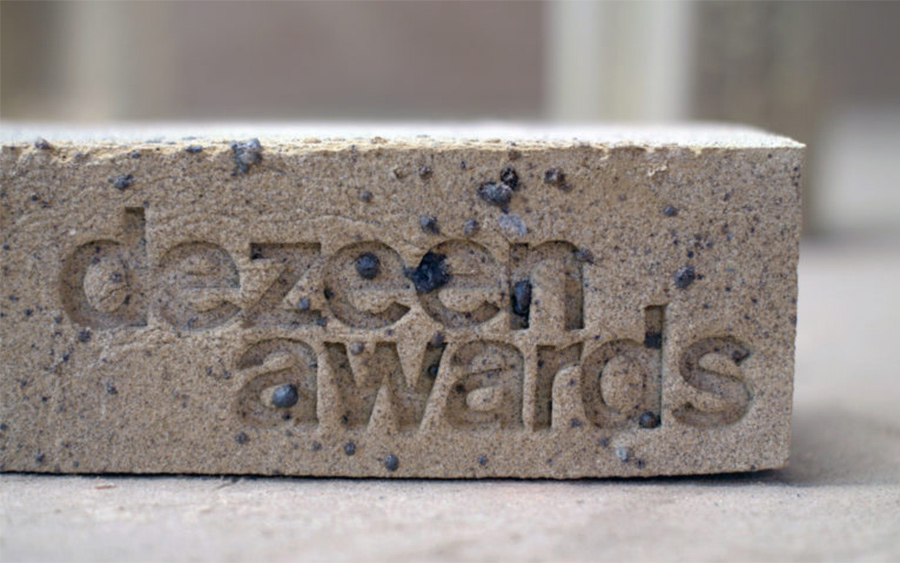
The result: a London clay brick in the shape of a “d”. In this article we look at the design and manufacturing process behind the Dezeen Awards trophy, how it has evolved over the years, and the lessons a brand can take from it when designing its own.
Contents
- The Design and Materials of the Dezeen Awards Trophy
- Winning a Dezeen Awards Trophy: Portfolio and Prestige
- The Dezeen Awards Trophy as a Marketing Tool and Earned Media
- What the Dezeen Awards Trophy Teaches Brands Designing Their Own Trophies
- Dezeen Awards 2026: Key Dates
- The Dezeen Awards Trophy: A Piece of Design That Is Part of the Prize
- Frequently Asked Questions
The Design and Materials of the Dezeen Awards Trophy
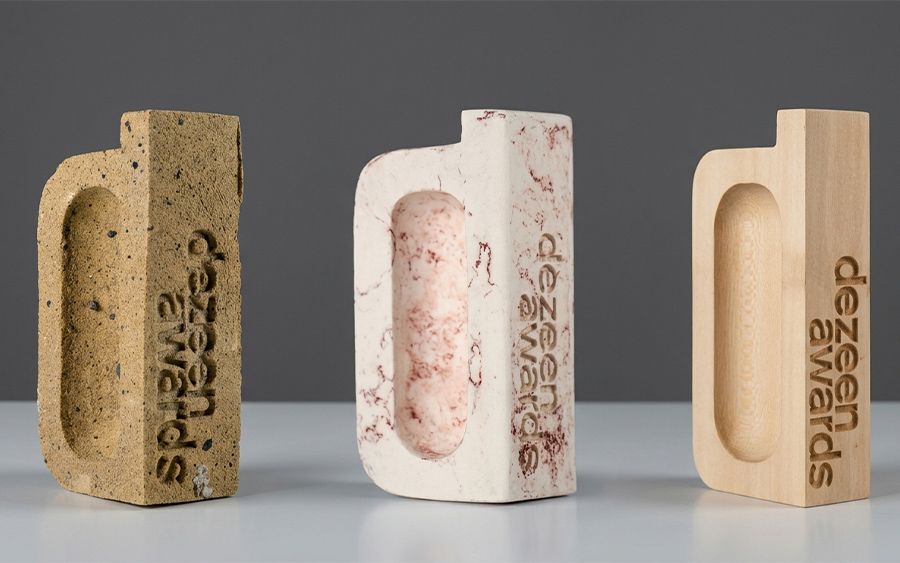
Atelier NL worked with London clay, the raw material of the city's iconic yellow bricks. They shaped a silhouette based on the “d” of Dezeen, adapting a standard brick mould to produce clean angles, rounded edges and an elegant, minimalist sans-serif typeface.
The result: 33 one-of-a-kind pieces which, after 50 hours of drying and firing at 1,025 °C, took on their final colour thanks to the clay's high calcium content, while small traces of glass, rock and metal give each surface a rough, unrepeatable texture.
The trophy's material evolution falls into three distinct stages:
| Stage | Material | Technique |
|---|---|---|
| 2018: Atelier NL | London clay | Moulding and firing |
| 2020: Atelier NL | Reclaimed wood from London trees | Hand-sawn; CNC-milled; laser-engraved |
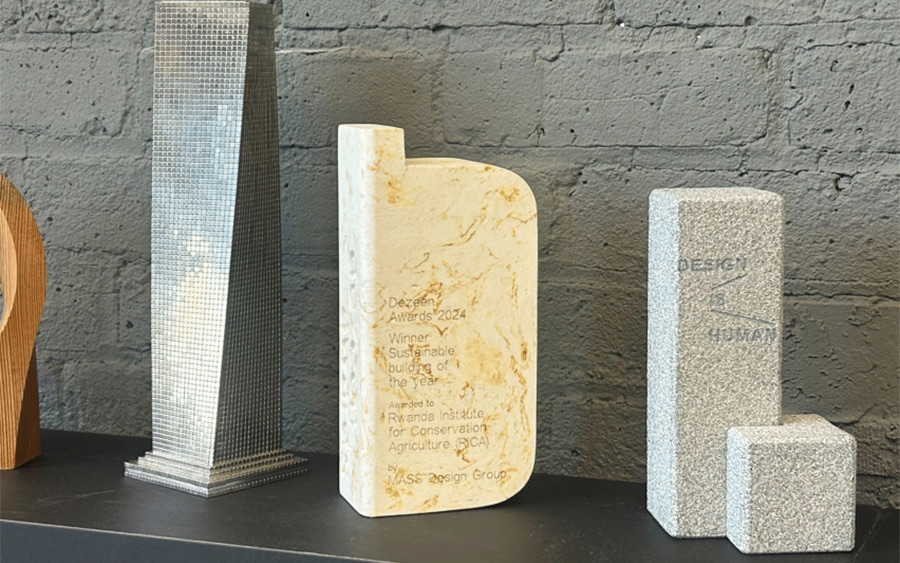
| Since 2023: Riccardo Cavaciocchi and Chris Cooke (Bentley), with Paper Factor | Paper Factor: micro-paper composite over a wooden core | Pressed; slow-dried; CNC-milled; a different marbling on each piece |
Winning a Dezeen Awards Trophy: Portfolio and Prestige
In 2025, the Dezeen Awards named 60 winners, 49 of them in project categories. Divided into three disciplines (Architecture, Interiors and Design), some of the most notable categories include:
- Project of the Year
- Designers of the Year
- Sustainability Awards
Winning in any of these categories means an international jury has singled out a studio's work, and that endorsement carries weight in a portfolio and in conversations with new clients. The trophy is the tangible proof of that merit.
Interestingly, at the first edition, Atelier NL, the trophy's creator, was named one of the “Designers of the Year” and so became a winner of its own creation.
The Dezeen Awards Trophy as a Marketing Tool and Earned Media
Dezeen doesn't just hand over a trophy: each award comes with promotional tools. Winners receive marketing material to present themselves as winners, a dedicated page on the awards website, and coverage on Dezeen and its social channels. That is earned media: coverage that isn't paid for and is generated by third parties.
The trophy fuels that conversation because it catches the eye. Linehouse, a 2019 winner, displays it in its meeting room. Its co-founder, Alex Mok, noted that the brick stands out among other awards thanks to its minimalist silhouette and the tactile richness of its finishes. A visually striking object encourages winners to show it off, so it appears in photos and posts, carrying the name of the award with it.


Turn your award's material into its best story
Custom design, care in every detail
Design your custom trophyWhat the Dezeen Awards Trophy Teaches Brands Designing Their Own Trophies
An award that presents a coherent recognition piece conveys its values through distinctive design, refined manufacturing processes and a conscious choice of materials.
Offering a unique texture, craft-based production or local materials builds a consistent narrative and makes the trophy an easily recognisable piece.
Dezeen's lesson is that material can tell the story of the award. London clay or wood from the city's trees explains where the award comes from and who made it. And this evolution shows it is possible to change the material without losing the identity of the piece. An object with that backstory is valued more, because the person receiving it knows what they are holding and can tell its story.
Dezeen Awards 2026: Key Dates
The ninth edition, with Trimble as principal partner, is in its final stretch: the jury has already chosen the winners and only the last milestones remain before the November gala of the Dezeen Awards.
- 21–23 September: the architecture, interiors and design shortlists are published.
- Until 16 October: public voting is open in architecture, interiors and design.
- Before 16 November: the public-vote winners are announced on Dezeen and on social media.
- 16 November: winners' gala at the Royal Opera House in London.
Turn your award's material into its best story
Custom design, care in every detail
Design your custom trophyThe Dezeen Awards Trophy: A Piece of Design That Is Part of the Prize
The Dezeen Awards trophy shows that a piece's value lies in its ability to convey the merit and story of the award visually. London clay, wood from the city and marbled paper: three materials for a single form.
At Sustain Awards, we start from one question: what material says something about the client or the event? We design custom trophies in ceramic, wood, stone or marble. Every commission begins with a material chosen with intent to represent the award's values.