Phone
 Email


- Trophies and sustainability
The Danish Design Award Trophy: From Gold Finish to Danish Oak and Ash
Since 2016, the Danish Design Center and Design denmark have presented the Danish Design Award at an annual ceremony in Copenhagen. The award recognises design solutions with a link to Denmark that bring about positive change for people, organisations and society.
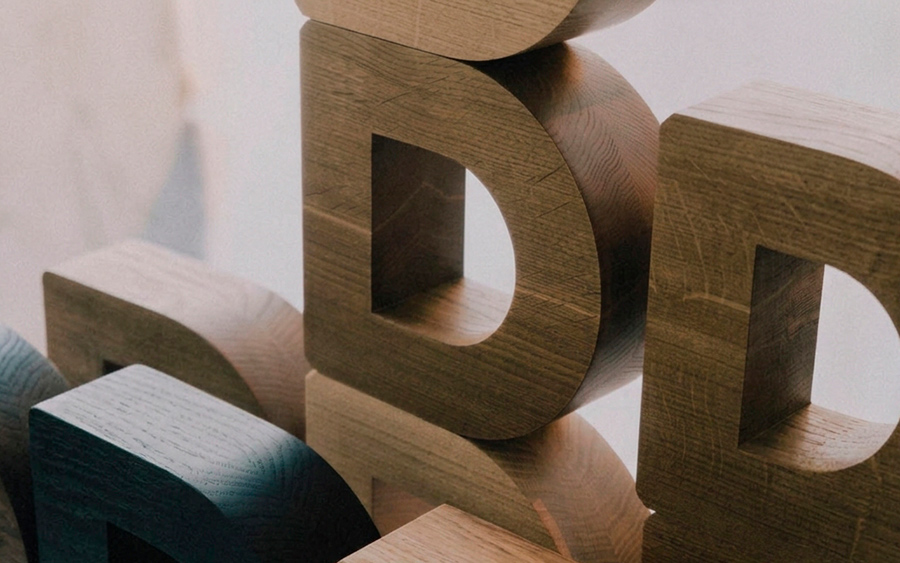
Kontrapunkt, a Copenhagen branding agency, designed the award’s visual identity in 2016, which is also applied to the trophy. In 2024, when the award was relaunched, Københavns Møbelsnedkeri, a Copenhagen furniture workshop, took over making the trophy in wood.
Starting from that change, this article looks at the two versions of the trophy and what the winner receives. It also draws lessons for brands that want to design their own trophy.
Contents
- Design and Materials of the Danish Design Award Trophy: From Gold Finish to Oak
- Winner Badge and Dedicated Profile: The Danish Design Award
- Visibility in the Independent Press: Danish Design Award Winners
- Two Decisions to Make a Trophy Represent the Brand
- Danish Design Award 2026: Key Dates
- Stable Silhouette, Renewed Material: The Danish Design Award Trophy
- Frequently Asked Questions
Design and Materials of the Danish Design Award Trophy: From Gold Finish to Oak
The trophy gives volume to the D formed by the words of the award’s logo. That initial combines the first two words of the name: the “d” of “Danish” and the “d” of “Design”.
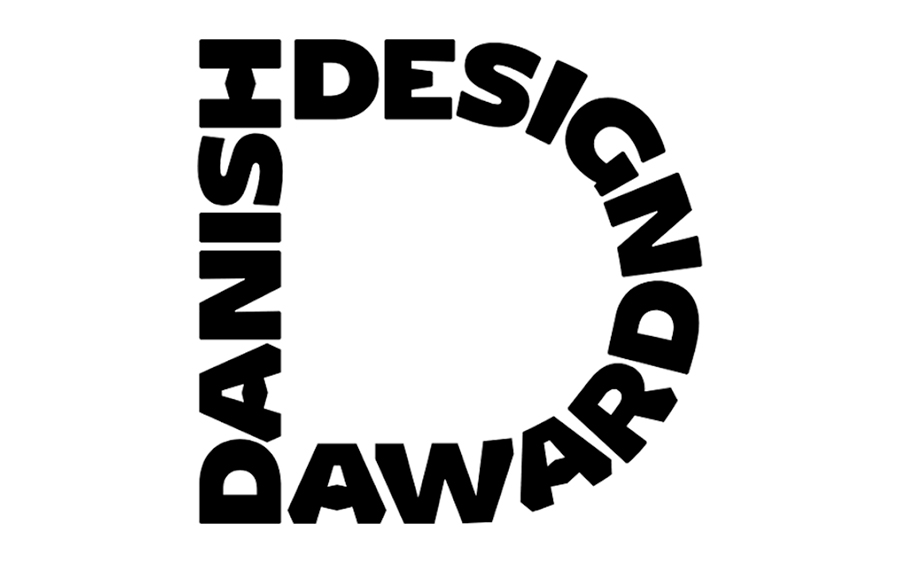
A straight edge runs along the left and a wide curve closes the right. In the centre, an opening with the same profile shows the thickness of the piece and lets light pass through it. The D stands on its lower edge, as a single piece. In the gold stage, the award’s engraving is on the side face.
The trophy’s material falls into two stages, with a year without a ceremony in between:
| Stage | Material and manufacture |
|---|---|
| 2016–2022 | Ash covered in gold leaf, an extremely thin sheet of gold bonded to the wood; visual identity by Kontrapunkt |
| Since 2024 | Danish oak and ash of local origin, according to the Danish Design Center, made by Københavns Møbelsnedkeri, a Copenhagen furniture workshop with its own sawmill |
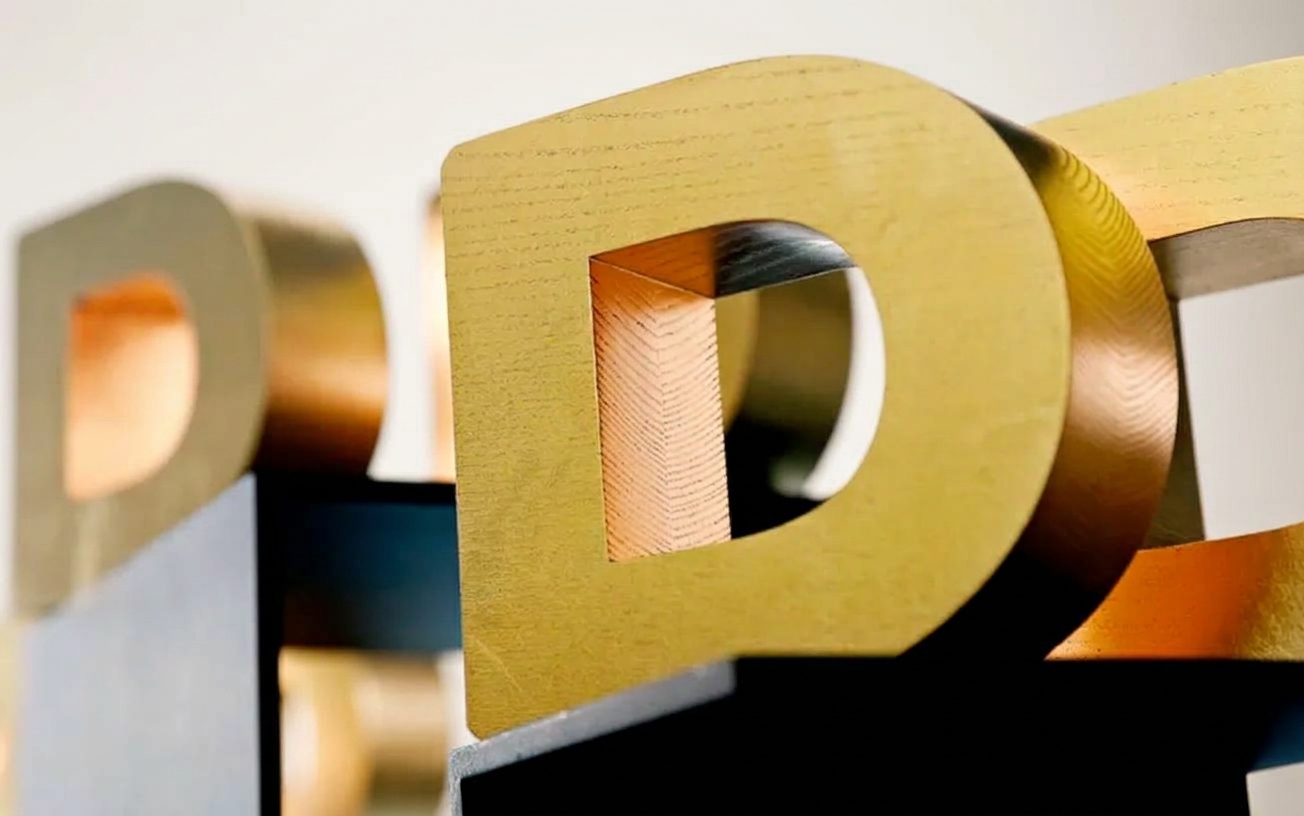
The gold leaf let the grain of the ash show on the faces and the growth rings on the side. Natural-finish wooden trophies, like the renewed oak and ash version, show those same grain patterns too. In both stages, the silhouette remains current and it is the material that gets renewed.
Winner Badge and Dedicated Profile: The Danish Design Award
A new jury chooses from the entries each year, and the distinctions have remained the same since 2024, although the special award has changed its name:
| Distinction | Who decides and who can enter |
|---|---|
| Five main awards | The jury awards them to entries with a link to Denmark |
| Young Ideas | Recognises early-stage projects by students and recent graduates of Danish institutions |
| Special Jury Award | Honours an exceptional solution. In 2024 and 2025 it was called Best of the Best; in 2026, Jury Award |
In 2026, the jury assesses whether each solution demonstrates craftsmanship, progress, relevance and viability. Winners gain brand advantages from the announcement, which makes the award a verifiable commercial argument. The most notable are:
- Winner badge: they can use the logo with the mention “Danish Design Award Winner” and the year in their communications, a verifiable reference for their customers.
- Dedicated profile: the award’s website presents each winner with images and the jury’s rationale, a third-party text the brand can quote.
- Commercial interest: Watts, a 2025 winner with its home energy system Homegrid, saw much greater interest from customers and partners.
Visibility in the Independent Press: Danish Design Award Winners
Coverage in independent media gives winners three benefits: visibility among industry readers, third-party backing for the award and business enquiries. Notable examples include:
- Interni, an Italian architecture, design and interiors magazine, published a report in 2024 on the seven winners of the ceremony, including MARYS, a concept for the hospital of the future. Its readers are industry professionals, potential partners or customers of the winning teams.
- The Copenhagen Post, an English-language newspaper aimed at Denmark’s international community, devoted a feature to the winners in 2025. Diana Saleh, creator of the Rumett gypsum panel, explained that since the award she has received emails from people interested in the material.
This coverage is known as earned media: visibility generated by third parties, such as independent media, without the brand paying for it.
Each article ties the project to the award in an independent source that the winning brand can link to in its own communications.


Give your trophy the shape of your brand
Custom design, care in every detail
Design your custom trophyTwo Decisions to Make a Trophy Represent the Brand
When a brand turns the shape of its initial or its symbol into a three-dimensional form, the trophy is recognisable without having to be read. At the Danish Design Award, the D drawn by the words of the logo becomes the trophy. That shape presents the award from any angle.
Likewise, when a brand updates its criteria, keeping the shape of the trophy and changing its material communicates the renewal. The recognition built up over the years is preserved. The 2024 relaunch coincided with the shift from the gold finish to wood, and the D kept its silhouette.
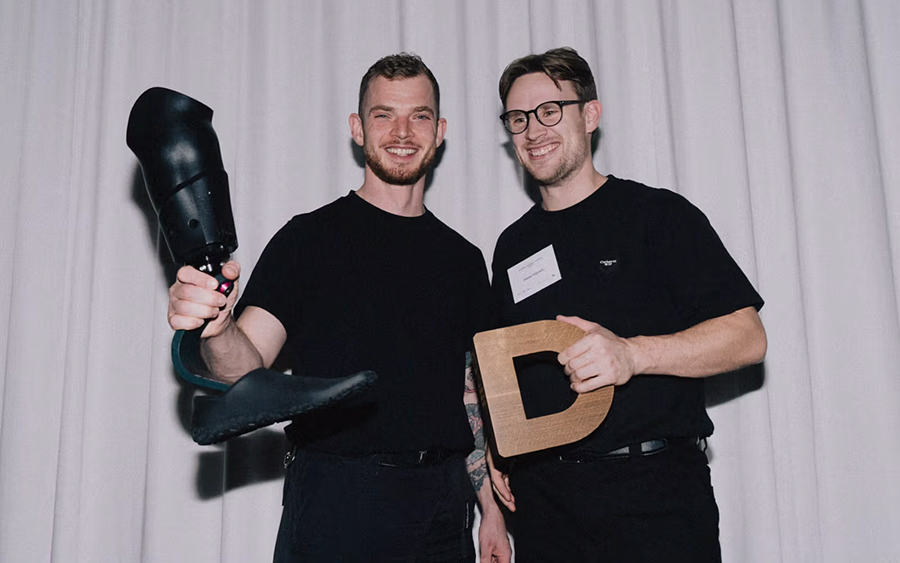
The D reflects a single decision across both stages: fix the shape and let the material mark each era of the award.
Danish Design Award 2026: Key Dates
The 2026 edition combines an open event presenting the finalists with the award ceremony in Copenhagen. The award publishes the list of 30 finalists and the date of the ceremony.
- 9 April 2026: entries open.
- 9 September 2026: presentation of the 30 finalists at an open event at the Designmuseum Danmark.
- 5 November 2026: award ceremony at the Nørrebro Teater.
Turn your brand’s initial into a trophy
Custom design, care in every detail
Design your custom trophyStable Silhouette, Renewed Material: The Danish Design Award Trophy
The Danish Design Award trophy turns the logo’s D into a three-dimensional form and renews it with each material: the gold finish that covered the ash until 2022 and the Danish oak and ash since 2024. In this way, a single silhouette presents the award to each winner and to those who see their trophy.
At Sustain Awards we design and manufacture custom trophies, handcrafted sculptures with unconventional shapes. Each piece starts from what your brand wants to recognise, including the shape of its initial or its symbol.