
 Phone
 Email


- Trophies and sustainability
PPWR packaging regulation: what it requires and how we comply
Starting August 12, 2026, the PPWR, the EU regulation on packaging and packaging waste, applies throughout the EU. It affects every company that places packaging on the European market. Anyone acting as a manufacturer must verify and document that their packaging complies.
We explain the PPWR packaging regulation: what it requires from that date and what changes through 2038. Then we show how we document the presentation boxes for our trophies.
Table of contents
- What the PPWR packaging regulation is and who it affects
- Requirements starting August 12, 2026
- What changes between 2028 and 2038
- What's the difference between recycled, recyclable, and compostable?
- What packaging our trophies come in
- How we document our presentation boxes
- Presentation boxes and PPWR compliance
What the PPWR packaging regulation is and who it affects
The PPWR (Packaging and Packaging Waste Regulation) is Regulation (EU) 2025/40. It entered into force on February 11, 2025, and replaces Directive 94/62/EC, the previous EU law on packaging.
The PPWR sets the requirements every package must meet. Its goal is to reduce packaging waste and harmonize the rules across all countries. It does this through specific requirements:
- Limits on hazardous substances.
- Packaging designed to be recyclable.
- Less material and less empty space.
- Uniform labels across the EU.
Because it is a regulation, it applies directly in every country, without each member state having to pass its own law. In Spain, it sits alongside Royal Decree 1055/2022, the Spanish rules on packaging and packaging waste.
The regulation defines three roles in the supply chain:
- Manufacturers: those who make packaging or packaged goods, or have them made and sell them under their own name or brand.
- Importers: those established in the EU who place packaging from outside the EU on the market.
- Distributors: those who make packaging available on the market without being manufacturers or importers.

Requirements starting August 12, 2026
From that date, every package needs three things:
- Conformity assessment (Art. 38): verifying that the package meets the regulation's requirements. The procedure is set out in Annex VII of the regulation.
- Technical documentation: the file that proves it. It is also detailed in that annex.
- EU declaration of conformity (Art. 39): the document stating compliance. It is drawn up for each type of package, following the template in Annex VIII of the regulation, by the manufacturer or its authorized representative.
The regulation also limits the substances allowed in packaging:
- Heavy metals: the combined total of four metals may not exceed 100 mg/kg (Art. 5):
- Lead.
- Cadmium.
- Mercury.
- Hexavalent chromium.
- PFAS: per- and polyfluoroalkyl substances, known as "forever chemicals." Their limits apply to packaging that comes into contact with food.
The EU declaration is a self-declaration: it requires neither CE marking nor certification by an outside body. The manufacturer keeps the documentation for 5 years for single-use packaging and 10 years for reusable packaging.
What changes between 2028 and 2038
The regulation adds new requirements on three dates: 2028, 2030, and 2038.
- 2028: harmonized labeling (Art. 12), from August 12, 2028, or 24 months after the implementing acts, whichever is later.
- 2030: maximum 50% empty space (Art. 24), from January 1, 2030, or 36 months after the implementing acts, whichever is later. It applies to three types of packaging:
- Grouped packaging.
- Transport packaging.
- E-commerce packaging.
- 2030: minimizing weight and volume (Art. 10), which requires using only the material needed for the packaging's function.
- 2030: recyclability grades A, B, and C (Art. 6), from January 1, 2030, or 24 months after the delegated acts, whichever is later.
- 2038: grade C is no longer enough.
These dates may shift, because they depend on rules the European Commission has not yet adopted.


From box to trophy, one design.
Discover what we can design for your awards ceremony.
Request your personalized trophyWhat's the difference between recycled, recyclable, and compostable?
Recycled refers to where the material comes from, recyclable to what happens to it at the end of its life, and compostable to whether it can break down into compost. These are three distinct concepts:
- Recycled: material made from waste. The PPWR's mandatory minimum recycled content applies to plastic, not paper.
- Recyclable: packaging designed to be recycled and that, in practice, is recycled at scale.
- Compostable: packaging that passes the tests in the European standard EN 13432. The tests are run on the finished package, not the raw material.
Starting September 27, 2026, Directive (EU) 2024/825 requires environmental claims to be specific and verifiable.
What packaging our trophies come in
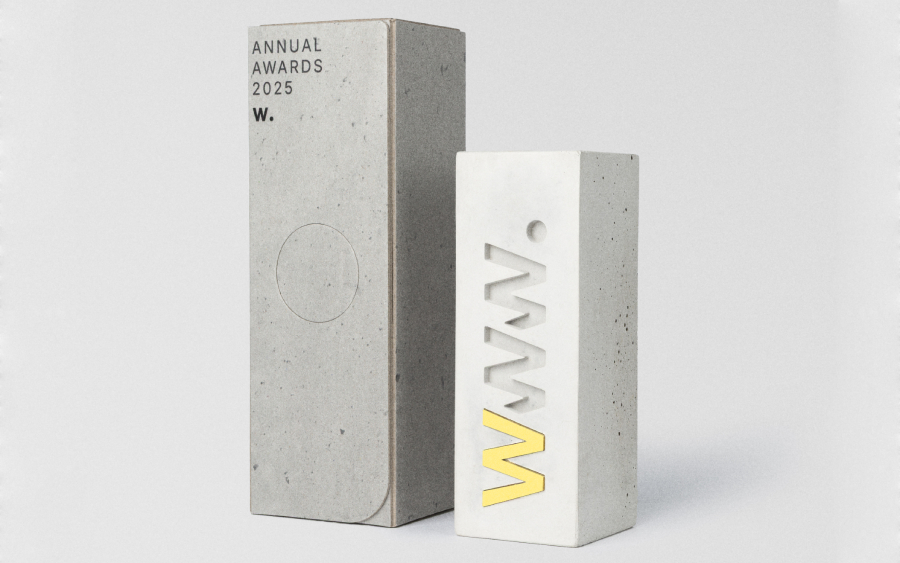
Each of our personalized trophies comes in its own presentation box, and custom projects get a custom-made box with a matching shape and finish.
Every box is made of 100% recycled rigid cardboard at 600 g/m². The finish is cement gray with a matte texture. The boxes are also 100% recyclable.
.jpg)
The presentation boxes for trophies in our collection come in three formats:
- Flat box, for square or rectangular award plaques.
- Vertical box, for totems.
- Cube box, for awards.
Personalization is done by screen printing, a technique that prints one or more inks onto the cardboard.
How we document our presentation boxes
We declare compliance with the PPWR in writing and maintain the technical documentation that supports it. The declaration is dated August 12, 2026, and applies in the cases set out in its applicability note.
The declaration covers, among others, these requirements of the regulation:
- Design for recycling: paper and cardboard are recovered through authorized waste managers.
- Recycled content.
- Limits on hazardous substances and heavy metals.
- Reuse and recyclability: the cardboard is 100% recyclable.
The technical documentation includes several documents:
- Material specifications and technical data sheets.
- Composition and statements from raw material suppliers on substances of concern.
- Evidence that the packaging is recyclable and compatible with recycling processes (Art. 6).
- Documentation updates after every material change.
.jpg)
From box to trophy, one design.
Discover what we can make for your awards ceremony.
Request your personalized trophyPresentation boxes and PPWR compliance
Starting August 12, 2026, the PPWR packaging regulation requires a conformity assessment, technical documentation, and an EU declaration for every package, and it extends its requirements through 2038. Our boxes are aligned with the PPWR's objectives.