Phone
 Email


- Trophies and sustainability
The Archiproducts Sustainability Award: a cedar that rises from circle to hexagon
Since 2016, Archiproducts, a digital platform for architecture and design, has run the Archiproducts Design Awards, which recognise products in 14 categories. The Sustainability Award goes to brands whose products pass the assessment of a specialist jury, which verifies the sustainability of their materials and production. Since 2023, Sustainability Award winners have received a trophy of their own.
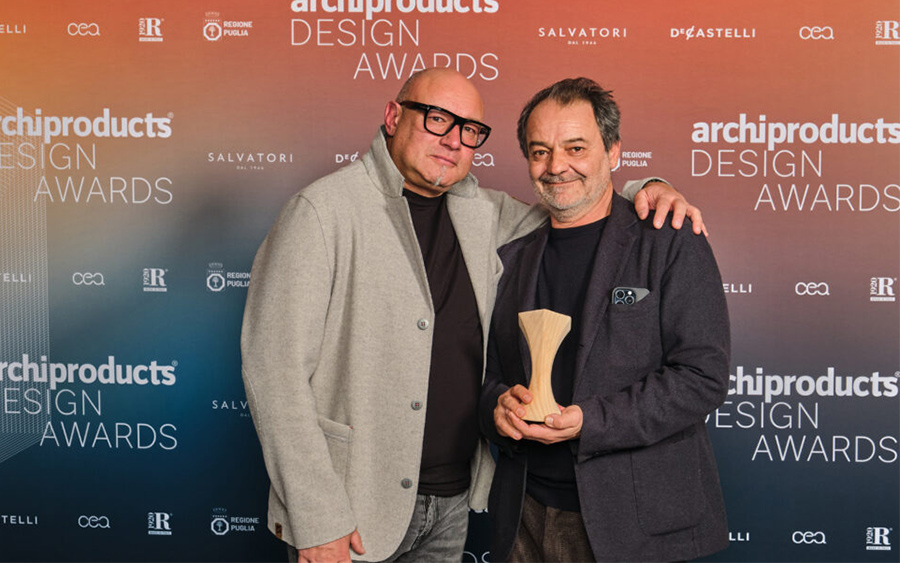
Archiproducts commissioned the trophy from AMDL CIRCLE, a multidisciplinary studio in Milan founded by Michele De Lucchi. The piece draws on the hexagonal geometry of the award’s logo and, according to Archiproducts, expresses a virtuous cycle, the essence of the category.
Starting from that idea, this article looks at the trophy’s design and materials, what the winning brand gets out of it, and the lessons it offers to brands that want to design a trophy of their own.
Contents
- Design and materials of the Sustainability Award trophy: Lebanese cedar
- Sustainability Award trophy: a jury that demands documentation
- The award reaches buyers through a trade publication
- A material and a shape that explain the award
- Archiproducts Design Awards 2026: key dates
- A shape designed for the winner’s hand
- Frequently asked questions
Design and materials of the Sustainability Award trophy: Lebanese cedar
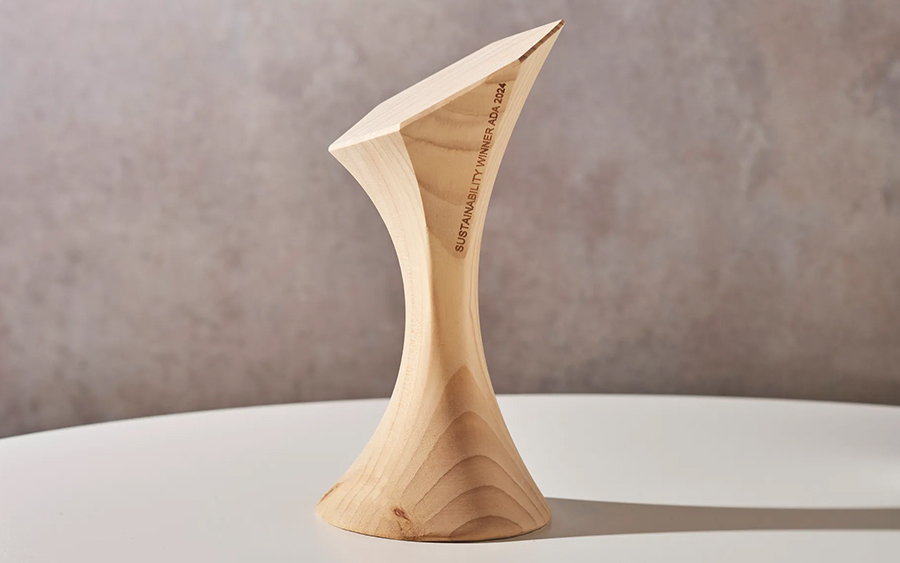
AMDL CIRCLE carries the logo’s hexagonal geometry over into a wooden trophy: the circular base rises into a tilted hexagon, ready to be held in the hand, as Archiproducts describes it. As for the cedar, Archiproducts says it comes from trees recovered after natural events or from controlled felling.
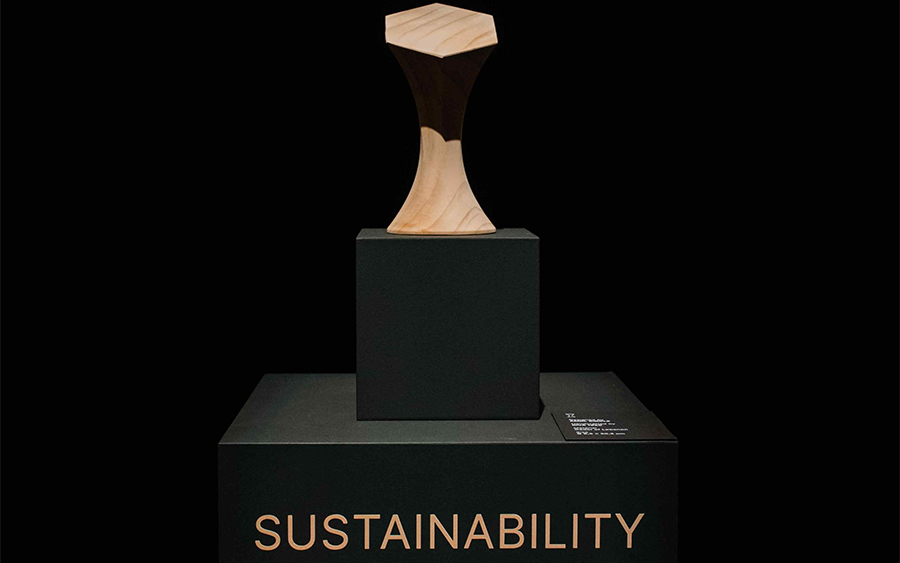
From bottom to top, the circular base, the widest part, supports the piece and narrows into a waist. It then widens again into a hexagonal section. The top plane is tilted, with one vertex rising above the others, which leaves the hexagonal face visible from the front. It is a single piece of wood.
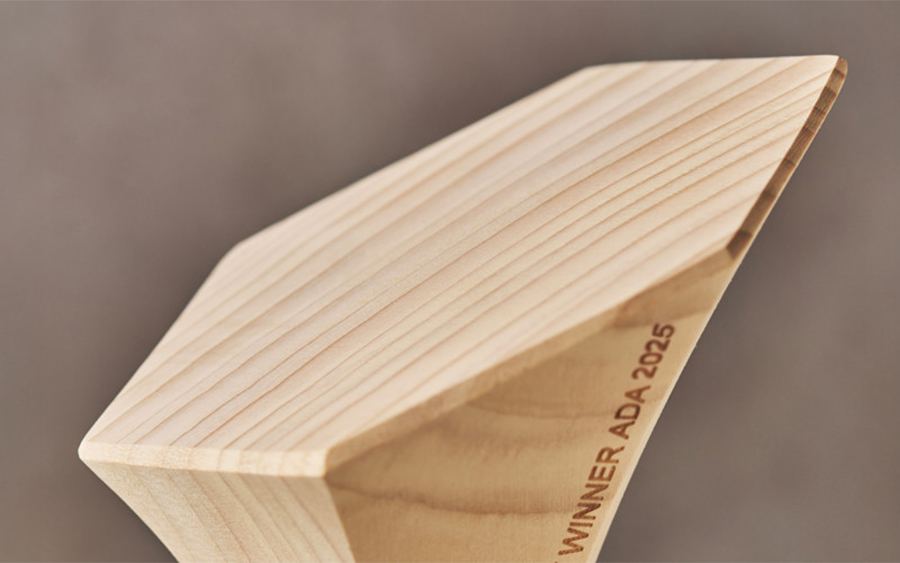
Lebanese cedar is a light wood with a fragrant scent and a pronounced grain, which runs in parallel lines on the top face. The grain is visible on the base, the body and the top, and each piece shows its own pattern.
Riva 1920, an Italian solid-wood furniture company based in Cantù, makes the trophy. Archiproducts describes it as an object that combines geometric purity and craftsmanship.
A circular base, a waist and a tilted plane define a silhouette that reads clearly in profile and that remains in use in every edition.
Sustainability Award trophy: a jury that demands documentation
To compete for the Sustainability Award, the brand nominates the product with a statement of motivation and uploads documentation as a PDF, in English, which is used to verify the sustainability of its materials and production. A dedicated jury of specialists in ecodesign and sustainability then evaluates each nominated product.
The rules set out three criteria, which the table summarises:
| Criterion | What the jury examines |
|---|---|
| Materials | Which materials the product uses and which of them are recyclable |
| Production techniques | The polluting emissions generated by manufacturing |
| Life cycle | The product’s complete journey, from manufacture to the end of its use |
Because every entry arrives with documentation that the jury evaluates, the award has concrete backing. Among the benefits the winning brand receives, the following stand out:
- Trophy and certificate: the cedar trophy and a copy of the official certificate attest to the award and can be displayed at the brand’s headquarters.
- Category badge: the product’s page on Archiproducts can carry the “Sustainability Winner” badge in addition to the winner badge, so the category award reads separately from the design award.
- Permanent showcase and catalogue: the product appears on a dedicated Archiproducts page and in the official digital catalogue of winners, available to the professionals who browse the platform.


Give your award a shape that reflects its merit
Custom design, care in every detail
Design your custom trophyThe award reaches buyers through a trade publication
On 20 January 2026, Mueble de España, a platform promoting Spanish furniture, published a roundup of the international awards won by Spanish brands in the second half of 2025. Among them is HOS, a collection designed by Japanese architect Kengo Kuma for GANDIABLASCO, an outdoor furniture brand, which won the “Sustainability Award / Outdoor”.
The publication reaches buyers, specifiers and design professionals looking for Spanish products. They are potential customers of the brand who do not follow the Archiproducts Design Awards.
That piece, written by an outlet independent of the brand and with no advertising spend, is what is known as earned media: visibility generated by third parties on the winner’s merit.
The outlet brings Spanish furniture brands, products and projects together in one place, so the mention connects to the collection’s page. The piece ties the badge to a specific collection and its category, a fact that anyone specifying products can check against the product page.
A material and a shape that explain the award
When the material of a trophy has a traceable origin, the object itself conveys the reason for the recognition. The cedar from recovered trees that Archiproducts uses for its trophy illustrates this: material and assessment speak of the same thing, and the brand that receives it can explain it in a single sentence. The more specific that origin is, the easier it is to tell.
In turn, a scale and shape designed for the hand make it easier for the winner to hold the trophy in the photographs of the ceremony, which can accompany the news on the brand’s channels. The circular base that rises into a hexagon, described by Archiproducts as ready to be held, answers to that scale. Size is a design decision as relevant as the material: it determines how the object is held and how it looks in a photograph.
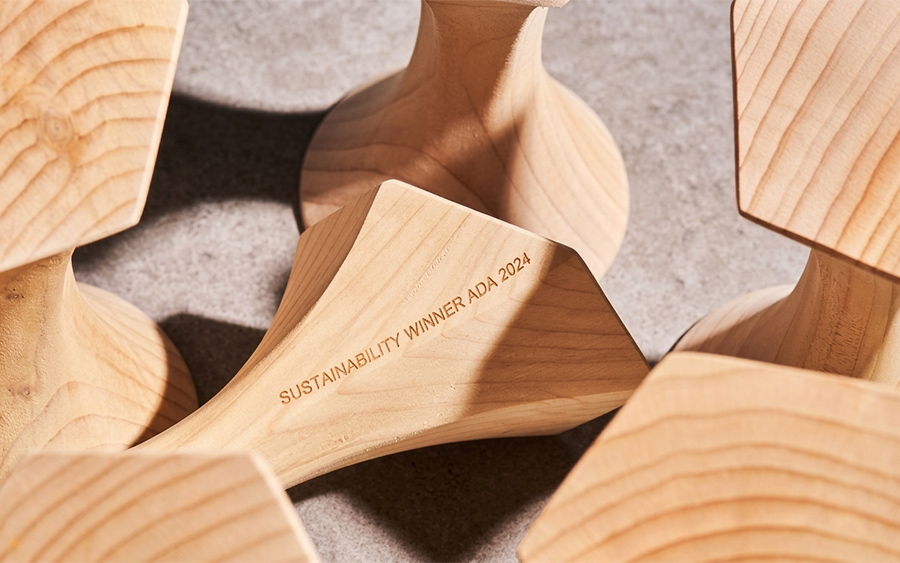
A cedar of traceable origin, a circular base and a tilted hexagon show how material and shape can explain why a brand is singled out for an award.
Archiproducts Design Awards 2026: key dates
Entries for the 11th edition are now closed. Archiproducts sets out the deadlines in the rules for the edition:
- 21 April 2026: entries open.
- 18 September 2026: entries close, extended from 14 September.
- October 2026: announcement of the longlist, that is, the products that go through to the final stage.
- November 2026: winners announced at the ADA Night in Milan.
Design a trophy with your brand’s material and shape
Custom design, care in every detail
Design your custom trophyA shape designed for the winner’s hand
The Sustainability Award trophy lets a circular base of Lebanese cedar rise into a tilted hexagon, and lets the origin of the wood echo what the jury evaluates. In this way, every winner receives an object whose shape and material speak of the same thing as their award.
At Sustain Awards we design and make handcrafted custom trophies, in which the material and shape are defined by the merit your brand wants to highlight.