Phone
Phone  Email
Email


- Trophies and sustainability
President's Club Awards: What They Are and How the Trophy Fits the Program
A President's Club award is an annual recognition given to the sales professionals who reach or exceed their yearly quota. The typical reward combines an all-expenses-paid trip with a physical trophy. The program is also known as Winner's Circle, Chairman's Club or Circle of Excellence.
In organizations where performance is a constant rather than an exception, recognition takes different forms. It does not need to be highlighted or justified. It appears as a logical consequence of a system that measures, compares and validates according to shared criteria.
President's Club Awards emerge in this context. They are not intended to attract attention or build an external narrative. They operate internally, as a shared code that signals consistency, reliability and alignment with the organization's highest standards. More than a one-off gesture, they function as an internal marker: a discreet way of acknowledging those who have managed to sustain performance when the bar was already high.

Table of contents
- What are President's Club Awards?
- How are President's Club Awards understood?
- The trophy within the program
- President's Club reward ideas: when and why travel
- Which professionals are typically recognized with a President's Club?
- What truly defines a President's Club Trophy?
- Consistency and continuity
- FAQs about President's Club trophies and awards
What is a President's Club Award?
President's Club Awards are part of internal recognition programs linked to sustained performance, not to isolated achievements or one-off successes. They recognize trajectories within a demanding annual cycle, evaluated using homogeneous and comparable criteria across the organization.
They are not aspirational or motivational awards in the traditional sense. They function as an institutional confirmation: the system acknowledges that certain professionals have consistently operated at the highest level of the established framework.
The same concept appears under several names across companies:
- Winner's Circle
- Achiever's Club
- Chairman's Club
- Diamond Club
- Circle of Excellence
- 100% Club
- Golden Circle (IBM)
The concept dates back to NCR in 1907, introduced by John Patterson. IBM later formalized it through its Hundred Percent Club and Golden Circle, establishing the model most sales organizations still follow today.
The value of the recognition does not require explanation or justification. It is supported by clear metrics, shared evaluation processes and an internal logic understood by those involved in the program.
How are President's Club Awards understood?
President's Club Awards do not function as one-off incentives. They are integrated into internal programs with comparable criteria across teams, regions and fiscal years.
They are based on:
- Consolidated annual metrics
- Comparison between equivalent roles
- Results measured under the same evaluation framework
Qualification usually follows one of several methods:
- Quota attainment: reaching 100% of the annual plan as the standard threshold
- Stack ranking: a fixed percentage of the team qualifies, ranked by results
- Fixed target: everyone who exceeds a defined threshold qualifies
- Performance bar: a minimum level set for the period
- Funding approach: the number of places flexes according to overall team performance
Representatives with fewer than nine months in quota are typically excluded from qualification.
The recognition is not defended or dramatized. It exists because the system validates it.


Looking for a President's Club Award?
Discover our trophies aligned with high-level recognition programs
Discover our trophy catalogThe trophy within the program
In this context, the trophy acts as a recording element rather than an amplifier of achievement. It does not seek to emphasize or explicitly celebrate, but to anchor recognition within a corporate structure where much of the value is intangible and temporary.
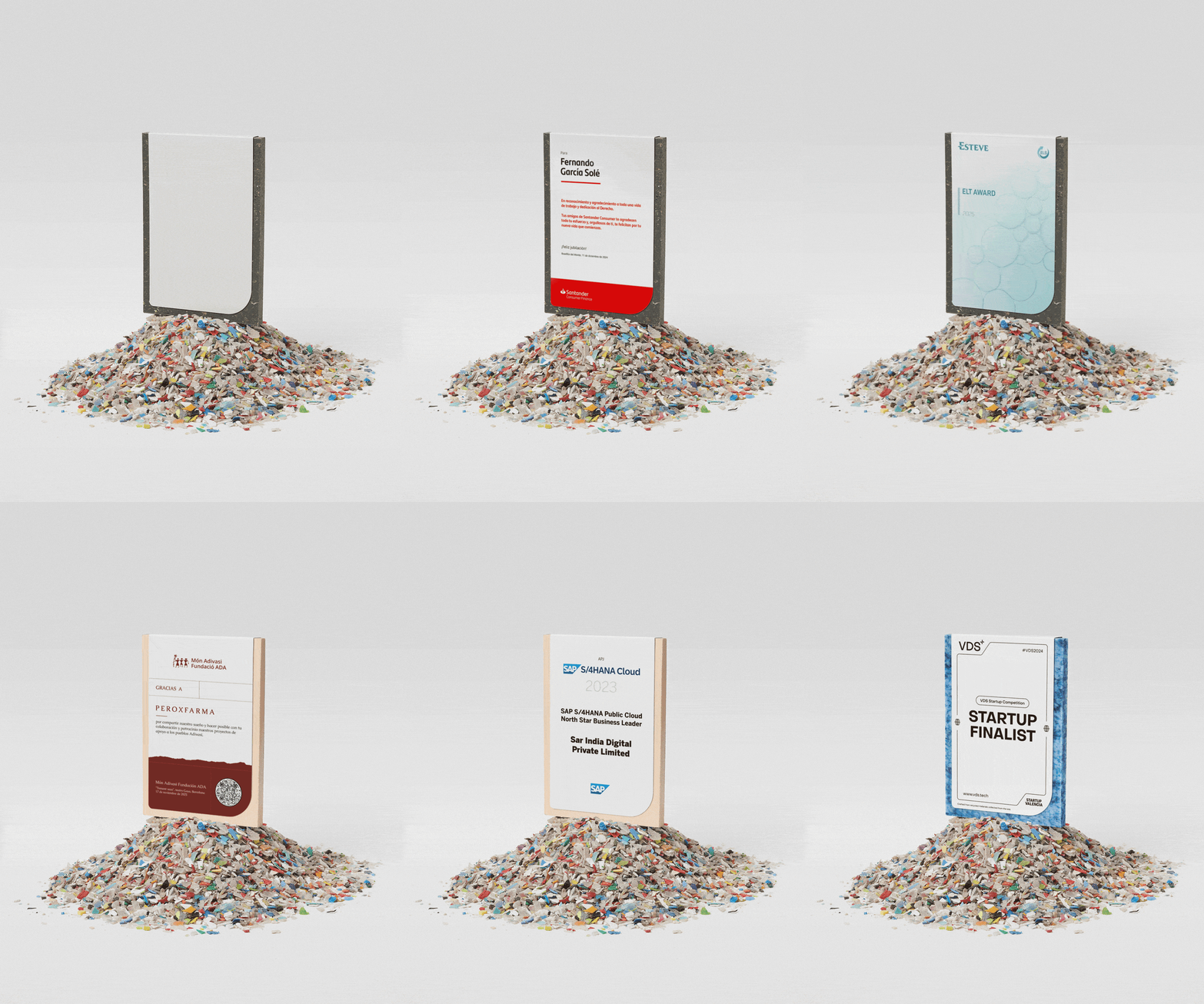
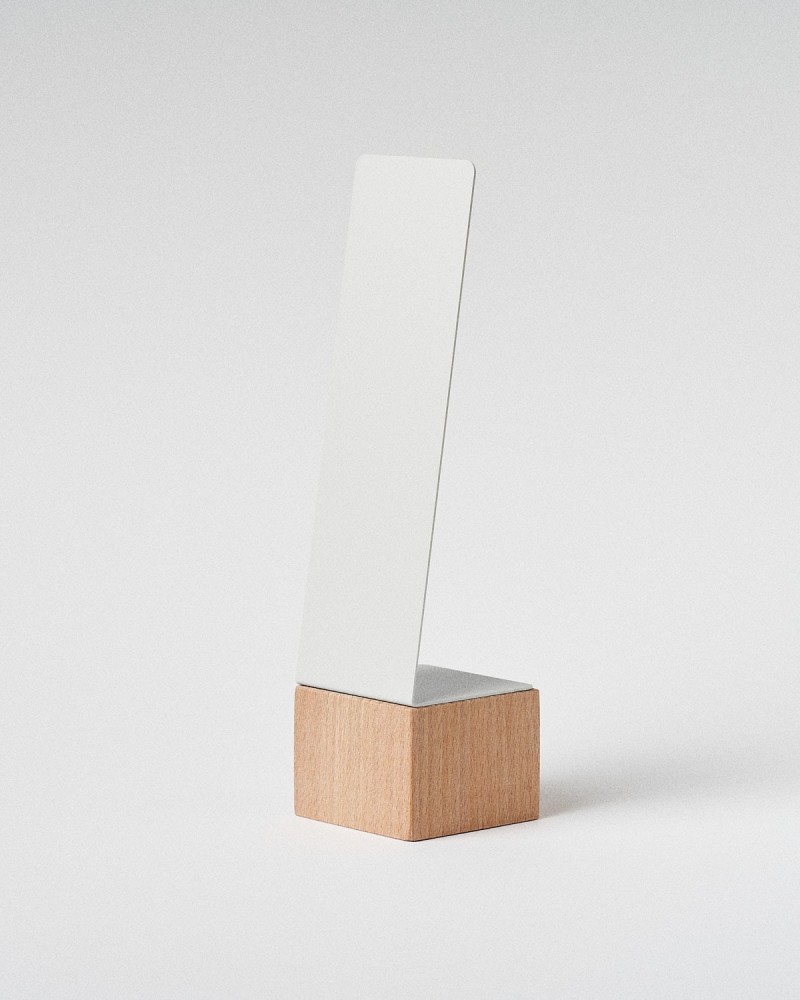
For this reason, its design does not demand attention. Its form responds to the logic of the program and the institutional environment in which it will exist, applying the same standards of material and finish that define a well-made corporate trophy.
President's Club reward ideas: when and why travel
Among the rewards associated with President's Club programs, travel is one of the most common, often organized as part of a wider incentive travel and corporate meetings program.
In this context, travel does not function as an individual prize, but as a shared space among professionals with similar levels of responsibility and seniority. It reinforces relationships, belonging and internal networks.
Common destinations include Cancún, Hawaii, Bora Bora and Napa. The trip is usually all-expenses-paid and includes a plus-one, with budgets often reaching around $15,000 per couple. Tangible alternatives, such as watches or vouchers, tend to range between $8,000 and $10,000 per winner. In most jurisdictions, the trip is taxable as a benefit linked to performance.
Its value is essentially experiential and ends when the experience takes place. It does not need to extend beyond its duration.

Which professionals are typically recognized with a President's Club?
Professionals who typically receive a President's Club award hold positions where performance is already a structural part of the role.
This usually includes:
- Sales leadership
- Strategic key account management
- Regional leadership
- Senior profiles with cross-functional impact
In practice, eligibility can extend across several profiles:
- Quota-carrying representatives: included when they reach or exceed their annual target
- CRO or Head of Sales: included for overall commercial results
- SDRs and BDRs: included when pipeline generation meets defined thresholds
- Sales engineers: included for their contribution to closed deals
- Sales operations: included when their support is tied to measurable results
- Non-sales functions such as marketing and customer success: included when their impact is measurable against shared goals
- Executives and CEO: included as program sponsors or by seniority
The recognition does not aim to motivate improved future performance, but to confirm a position within the system.
What truly defines a President's Club Trophy?
A President's Club trophy must clearly sit outside the codes of the generic or standardized corporate trophy.
It works when it incorporates:
- Specific, non-generic design
- Carefully selected materials, not standard options
- Finishes that convey control of detail and formal precision
Material selection is key. They should not evoke merchandising or conventional awards. They must provide visual weight, institutional readability and a clear perception of status.
The design does not need to be complex, but it must be uncommon. It should differentiate itself without resorting to attention-seeking gestures or obvious narrative devices.
A well-designed President's Club trophy does not compete with its surroundings. It integrates into them.
Consistency and continuity
In programs of this kind, recognition must be repeatable without losing meaning. Each edition builds upon the previous ones, gradually forming a distinct internal language within the organization.
When the trophy responds to this logic, it ceases to be an isolated object and becomes part of the company's recognition system, beyond the conventional logic of the corporate trophy.
This is what distinguishes a well-conceived President's Club Trophy from just another award.