Phone
Phone  Email
Email


- Trophies and sustainability
Fake awards and trophy scams: how to spot them before it's too late
Corporate awards scams are a growing problem across every sector, and they now operate through three distinct schemes. Here you will find how each one works, how to spot them before paying, and what a real recognition programme looks like. When a programme is legitimate, the trophies it awards and the processes behind are part of the recognition's value — a signal that the programme takes its own standards seriously.
Index
- How the schemes work
- Why businesses fall for it
- Three scheme types to understand
- Nine red flags to check before you respond
- Why trophy quality reflects the level of the programme
- What a legitimate award looks like
- If the award is real, every part of it should be
How the schemes work
A company receives an unsolicited email: it has been selected for a business award. The branding looks professional, the award title sounds credible, and the offer is specific — a trophy, a digital badge, and coverage in an industry publication. At the end of the message, a payment is required to confirm participation.
No evaluation takes place. The company that pays gets the award. It is a paid product sold as merit.
Some operators don't ask for money upfront. Instead, they clone the website and branding of a legitimate programme, register a near-identical domain, and send invitations that are difficult to tell apart from the real thing. Victims find out only after paying or handing over company data.
Others skip payment entirely. They send a free digital badge — "Top Innovator", "Best in Industry" — to display on the winner's website. The badge contains a hidden link to the operator's domain. As more businesses install it, that domain gains search authority, which is then sold or pointed toward harmful content. Every site carrying the badge gets dragged along with it.
75% of business leaders don't know how to find credible awards or judge their legitimacy. That's the gap these schemes operate in.

Why businesses fall for it
An award on a website signals credibility to anyone who sees it. Fraudulent operators know this and build their outreach to push for a fast decision before any verification happens.
The emails use urgency: limited spots, tight deadlines, references to competitors already on the list. The unsolicited nomination creates the impression of being discovered through research rather than pulled from a bought contact database. Both tactics reduce the time between receiving the email and paying.
Three scheme types to understand
Imitation scams. Fraudsters copy the look of a real awards programme — website, logo, email format — and contact businesses claiming they are finalists or winners. Most victims only realise something is wrong after paying or sending sensitive data.
Pay-to-win scams. There is no judging. Winner spots are sold, usually presented as a magazine feature or an online listing. Some buyers know what they are purchasing. Many do not.
Backlinking scams. A free badge arrives — "Top Innovator", "Best in Industry" — with instructions to place it on the company website. It costs nothing and looks like recognition. The badge carries a hidden link that builds search authority for the sender's domain. When that domain is sold or redirected to harmful content, every site displaying the badge is connected to it.
Nine red flags to check before you respond
Before responding to any award nomination, check each of the following:
- You were contacted without applying. Legitimate programmes publish their process. An unsolicited nomination is not recognition — it is outreach.
- Winning requires payment. Entering a programme may carry a fee. Paying to receive the result does not.
- The award name produces no verifiable search results — no independent press coverage, no documented history across editions.
- There is no named judging panel with individual professional profiles that can be checked.
- No archive of past winners exists on the organiser's site.
- The badge links to an unrecognisable domain. Check the destination URL before installing anything on your site.
- Every stage has a separate price: the ceremony, the trophy, the badge, the PR package, the additional placements.
- The email specifies a deadline but no evaluation criteria. Urgency without methodology is a sales tactic.
- The domain, email address, or visual identity closely resembles a known programme. Verify directly through the organiser's official website before taking any action.
Why trophy quality reflects the level of the programme
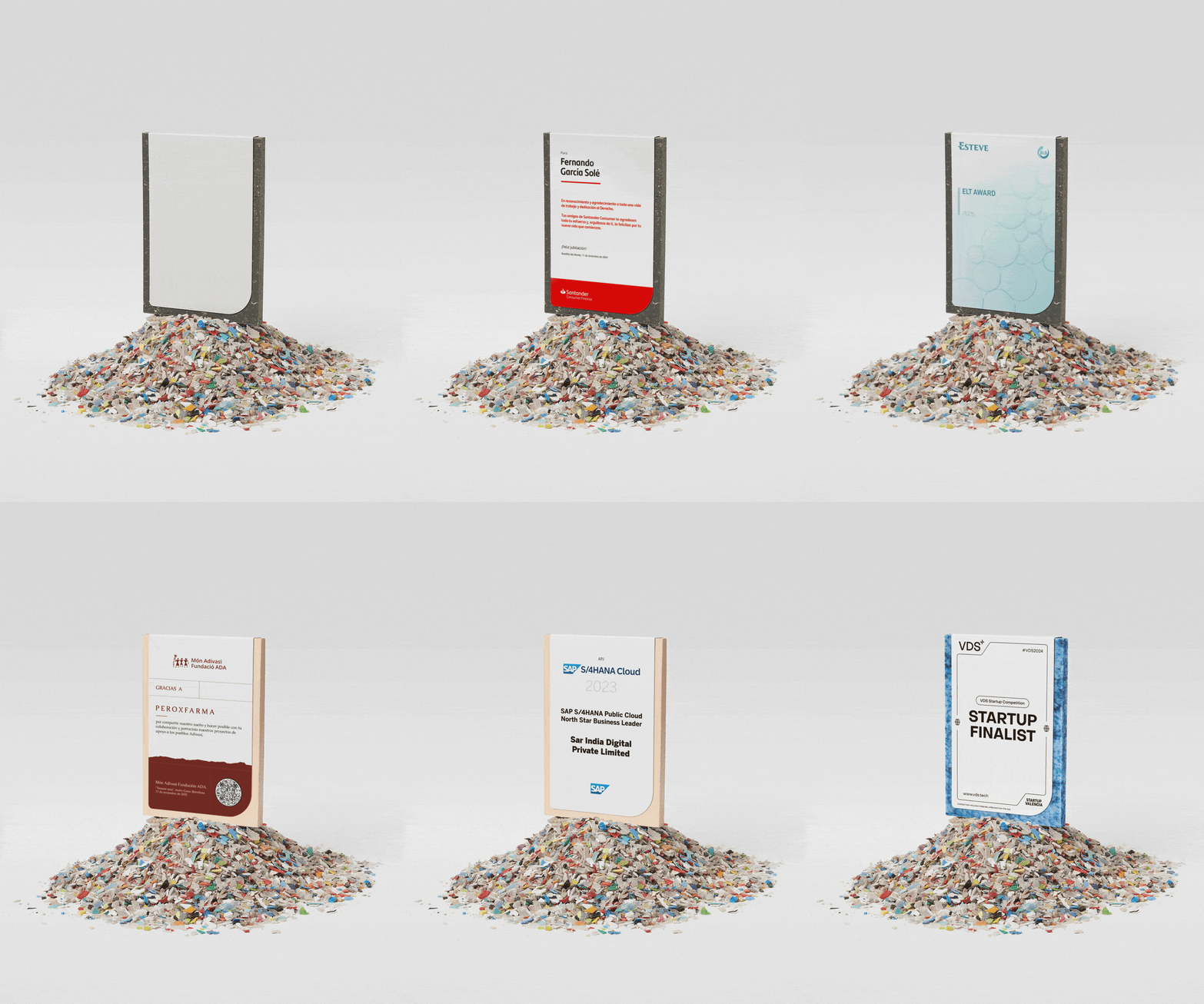
The physical piece an award programme delivers says a lot about the standards behind it. Programmes with real evaluation processes invest in corporate trophies built with defined materials and construction. A generic, poorly finished piece with no precision in engraving or surface treatment reflects the same absence of standards as the process that produced it.
Organisations that treat recognition as a genuine business tool — not a revenue scheme — invest in pieces whose quality corresponds to what the award represents.


If the award is real, the trophy should be too.
Discover our corporate awards — designed to live up to the recognition you deserve
View corporate awardsWhat a legitimate award looks like
A real programme publishes its criteria before the entry window opens, names its judges with profiles that can be verified individually, and charges any entry fee before the evaluation — never after. Past editions are documented and findable. Independent press has covered them.
The most credible programmes back this up with structure: large judging panels that deliberate in person, shortlisted companies that present live, and juries with no commercial ties to the entrants. These are not details — they are the mechanisms that make a result mean something.
Fewer than half of industry stakeholders describe awards judging as transparent. Checking a programme against the criteria above takes under ten minutes and is the only reliable way to tell the difference.
If the award is real, every part of it should be
Corporate awards credibility scams follow a predictable structure: unsolicited contact, payment tied to the result, no verifiable judging process, and revenue generated at every stage. The three variants now in operation — imitation, pay-to-win, and backlinking — are each detectable with the checks described above.
Legitimate programmes publish their criteria, name their judges, and charge before the evaluation — never after. A purchased recognition carries a cost that compounds over time.