Phone
Phone  Email
Email


- Trophies and sustainability
The Trophy as a Brand Asset: What Your Award Actually Communicates
The connection between award trophy design and brand perception is direct. When organisations invest in the visual identity of an awards programme — website, communications, event staging — the trophy is frequently treated as secondary. This article examines why that choice matters for brand recall, and how the physical piece that recipients keep communicates the values of the organisation long after the awards ceremony ends.
Table of Contents
- The one touchpoint that stays
- What each material decision communicates
- When process opacity shifts the weight to the object
- Why a generic design carries a hidden cost
- The trophy as organic brand distribution
- Integrating brand identity into the piece
The one touchpoint that stays
An awards programme has several brand touchpoints: the nomination platform, the invitation, the stage at the ceremony. Most of them disappear once the event closes. The trophy does not. People remember physical objects with more detail and for longer than documents or digital messages. A recipient who wins in March will still have the trophy on their desk in December — and so will every visitor to that office for years to come.
No other element in the programme does that. The trophy keeps communicating the organisation's brand without any further action or cost.
 (1).jpg)
What each material decision communicates
Every material choice in a trophy produces a specific visual and tactile reading. These are not subjective responses — they are consistent patterns in how people interpret physical objects.
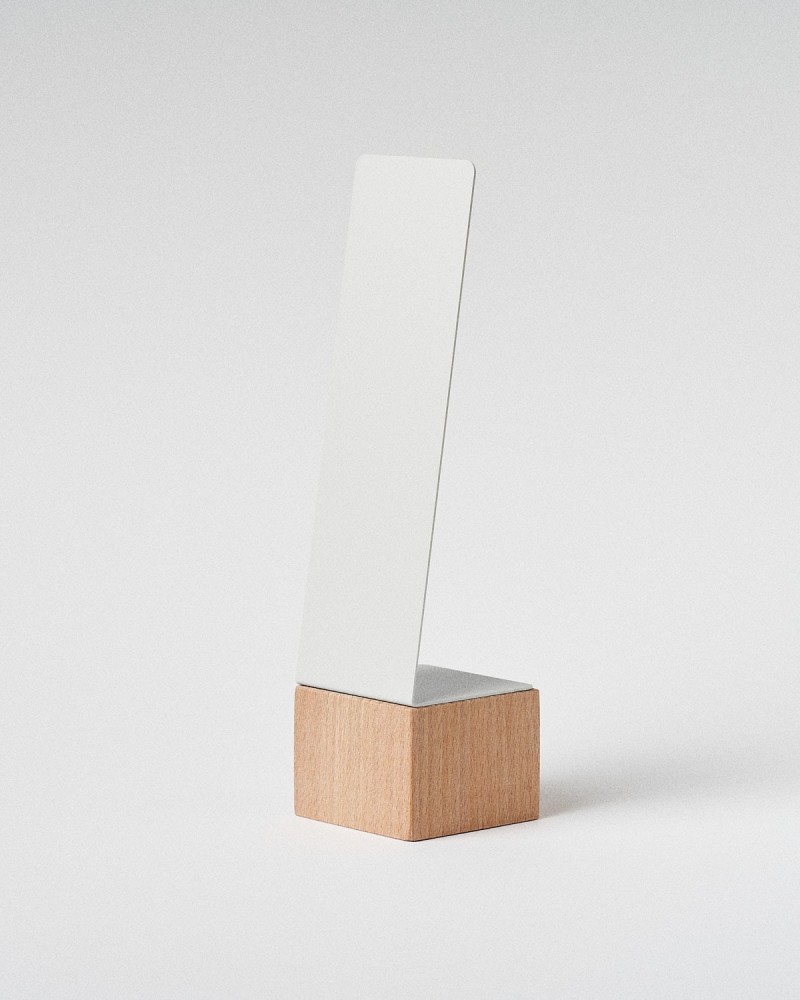
Wood reads as organic, warm, and handcrafted. It carries associations with permanence and natural origin, which align with programmes that emphasise sustainability, heritage, or human-centred values.
Metal — whether cast, pressed, or cut — signals weight, durability, and industrial precision. A steel or aluminium piece communicates that the award was built to last, not assembled from stock components.
Stone or stone-like materials produce a sense of gravitas through density. The weight of the piece in the hand directly shapes how the recipient perceives the importance of what they are holding.
Resin and opaque plastics are versatile in form but read as lower in material hierarchy unless the finish, colour, and detailing are executed with precision. The form has to carry more of the work.
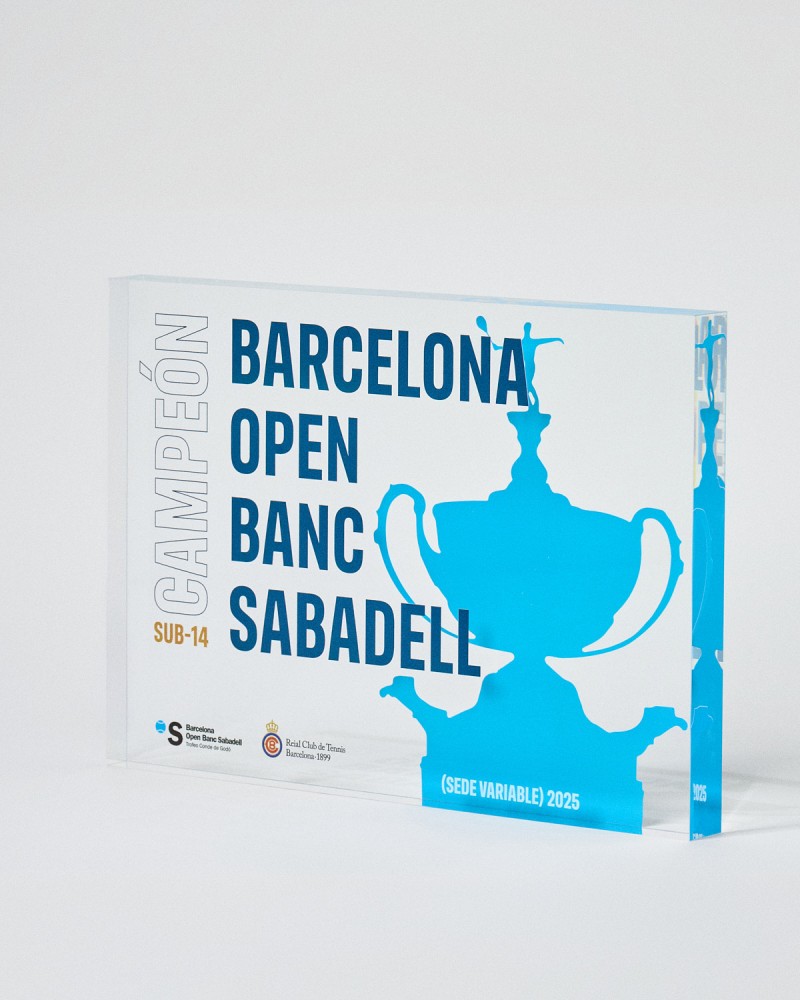
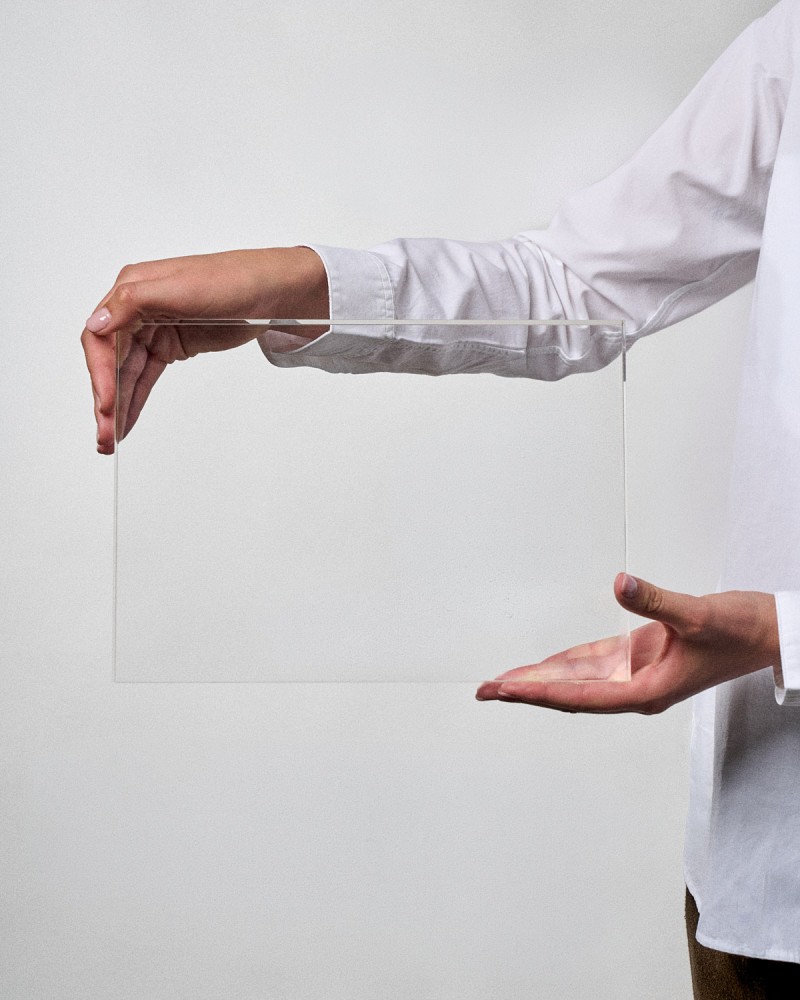
Glass and acrylic (methacrylate) communicate clarity, contemporary form, and visual precision. Transparency allows light to pass through the piece, making it behave differently at different times of day.
That last property is particularly relevant for how trophies perform on professional networks. An acrylic piece photographs differently from a multi-component trophy: the surface captures light without competing elements, the logo reads clearly, and the form holds its own in a photograph taken on a desk or at an awards ceremony.
For programmes aligned with innovation, design, or sustainability, our VITRA collection offers Acrylic Trophies fabricated from recycled acrylic — built for that visual and material language.

When process opacity shifts the weight to the object
When award evaluation criteria are not clearly communicated, recipients and finalists instinctively shift their judgement to what they can see and touch. If the jury's reasoning is opaque, people assess the credibility of the award by the object in their hands. A piece fabricated from low-cost materials in that context does not read as neutral — it reads as a signal that the organisation did not take the award seriously.
This is why trophy design is, among other things, a credibility decision. The physical piece either reinforces the seriousness of the process or quietly undermines it. Corporate trophies work precisely because their sober forms and coherent design language are consistent with the environments and standards of the organisations that deliver them — and recipients read that consistency immediately.
Why a generic design carries a hidden cost
A regular piece signals that the organisation did not design specifically for this award. The piece could belong to any programme, in any sector, from any year. People incorporate objects into their professional identity in proportion to how distinctive and deliberate those objects appear. A piece designed with the programme's specific visual language produces a stronger sense of recognition in the recipient, and a clearer institutional signal to everyone who sees it.
The trophy as organic brand distribution
When a recipient photographs a piece and shares it on LinkedIn or in a press release, the organisation receives earned media at no cost. Three factors determine whether that happens: a form visually distinct from standard award shapes, a brand mark that reads clearly in a photograph, and a material surface that translates well to screen.
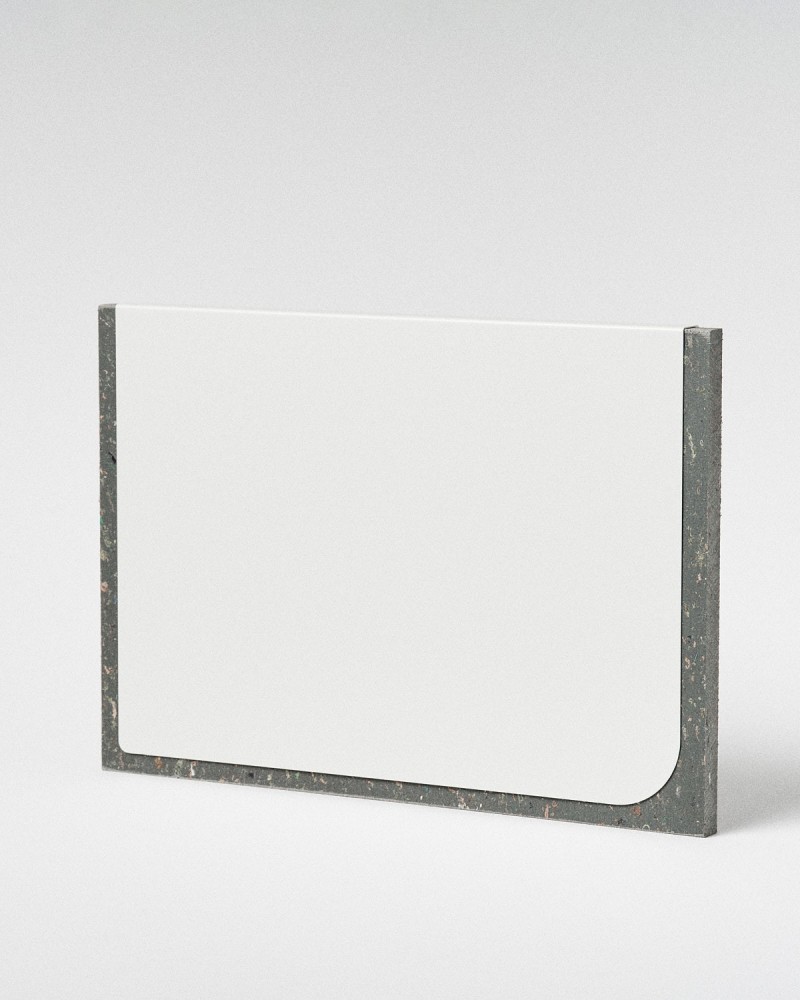
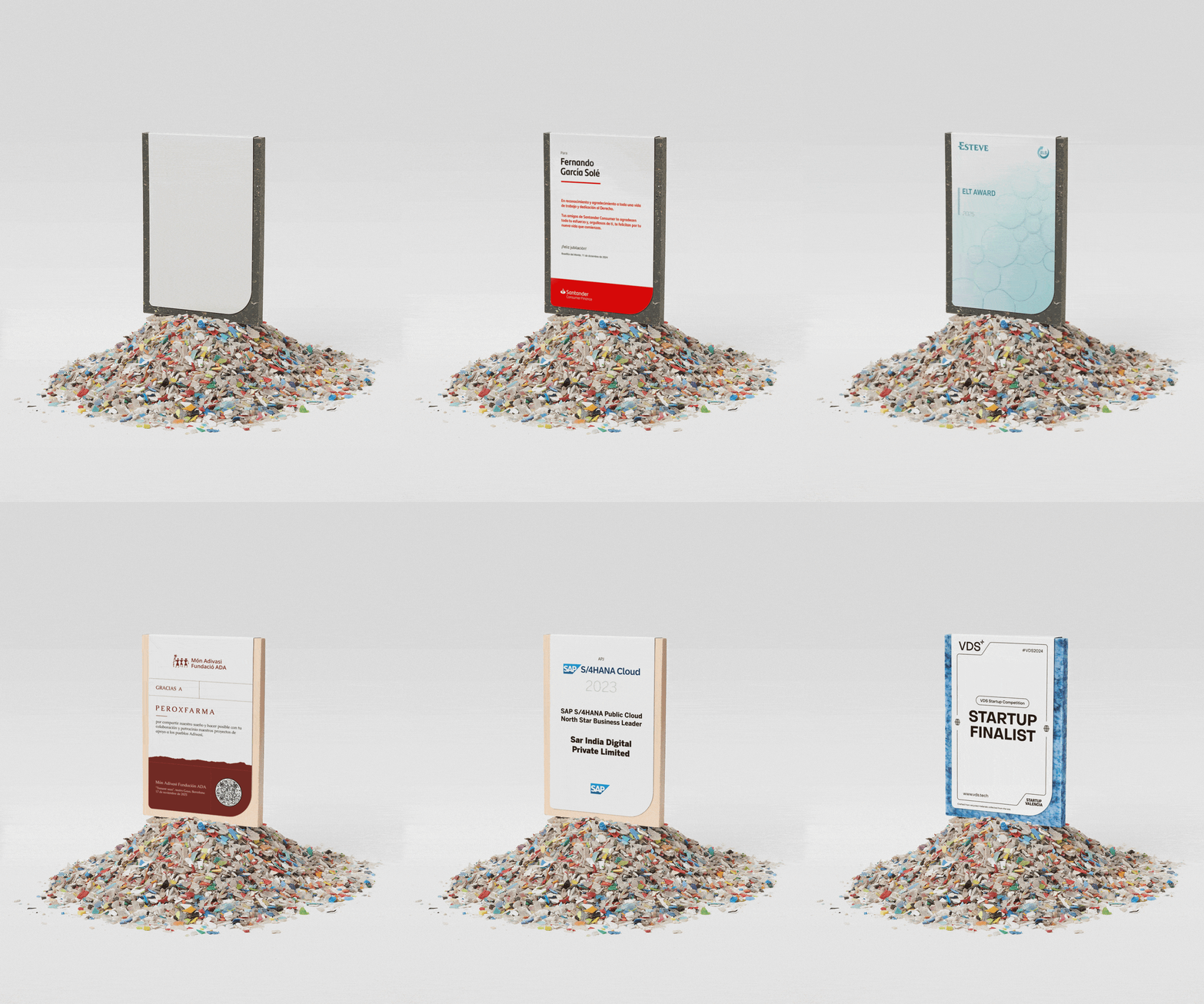
Our trophies are made from brushed steel with recycled content, polished acrylic, beech wood, and post-consumer plastic, all surfaces that photograph clearly under standard office or event lighting. The organization's logo and the program name are built into the piece at the design stage, structurally aligned with its form rather than applied onto a pre-existing base.
Integrating brand identity into the piece
The most direct way to treat the trophy as a brand asset is to include the brand guide in the brief. We work from brand books, colour specifications (Pantone references, RAL codes), and typographic systems to fabricate pieces where the graphic personalisation is built into the physical form from the start — not added at the end. When recipients receive a piece that reflects the same visual identity as the rest of the programme's communications, the award reads as a coherent institutional decision, not a separate one.
That consistency compounds over time. A piece aligned with the brand system in year one remains recognisable across future editions of the programme, reinforcing the award's identity with each new cycle.
Award trophy design determines what stays with recipients once the ceremony ends — and what keeps representing the organisation in offices, desks, and professional profiles for years. That physical presence is the only brand touchpoint that travels to the recipient's world and stays there, without any further action from the organisation.
Sometimes the most fitting response is a piece designed from scratch — one that exists only for that programme, that brand, that moment. If that is the direction, our custom trophies are designed and fabricated to brief, with no catalogue constraints.